Sunday, January 28, 2018

A Lazy Brand of Leadership

When things go wrong on your team, when emotions come to a boil, how do you react? 

 Do you single out individuals? Do you start demanding answers? Or do you first take the time to understand how things went wrong before you single out or demand answers? Tread carefully, because this is what will define you as a leader.

If there is one trait that goes straight to the heart of what defines a strong leader, it is empathy. Empathy is the one trait that strikes an emotional cord between the leader and their teams. You don’t need to be socially connected to your team as a leader to practice empathy, because as it so happens, we are wired to be empathetic from the day we are born. As Simon Sinek points out in Leaders Eat Last, empathy is central to our survival as a species since the days when we were hunting and foraging as cave people. Without empathy binding our tribes, humanity as we know it would have never emerged.

A typical response to the need for empathising with your team members is to shy away, because most of us are uncomfortable dealing with emotions, especially in a professional setup. One possible reason is that we believe empathising requires developing a special bond with your fellow employee. This cannot be further from the truth. In most cases, empathising is really just as easy as these 8 steps -

  1. Sense the emotional turmoil the fellow employee is undergoing. Are they angry, or just irritated? Do they feel disappointed, or let down? 
  2. Record your observations about their emotional state by confirming. “I sense you are gravely disappointed”. 
  3. Wait as this opens the door for a conversation. If the fellow employee backs off and denies this emotional state, you back off as well. If instead they agree or clarify their emotional state, you have a foot in the door.
  4. Guess, based on what you might already know situationally, what might be behind this state of mind. Make sure this is an educated guess. “Is it because you expected a greater reward for the work you have put in?”
  5. Converse so you either affirm your guess or lead toward the reasons behind this state of mind. If nothing else works, try - “Can we talk about what has led you to be so gravely disappointed?”
  6. Relate to those reasons to help your fellow employee accept the turmoil they are going through. “I can see how this might have hurt you deeply”. Accepting emotions allows one to realise they are human. It allows them to stop fighting those emotions and move toward resolutions.
  7. Understand how we got here. There is usually a chain of events leading to this particular reaction. Somewhere in that chain, lies the crux of the problem.
  8. Resolve to work toward a solution that works for everyone. At times, the resolution is not obvious and requires further break-out discussions. "Give me some time to get other perspectives on this." On other occasions, there is no need to solve anything because empathising already led to the right frame of mind to help this person solve it themselves. 

When we watch 3-year-olds sense emotions and empathise with their irate parents, there is no reason why we as adult leaders cannot do the same with our stressed-out teams. When it’s really so straightforward, and really so natural for most of us, not practising empathy to understand before acting, is just lazy.

Saturday, February 11, 2017

Lessons from a Daily Commute

I drive to and from work for around an hour and a half each day - usually on my motorcycle - on the chaotic roads of Chennai surrounded by aggressive drivers competing for every inch of space. I tried to draw parallels between the chaos I witness on the roads and the journey of a typical startup in the chaos of market forces. My personal goals on the road are much the same as that of a startup - survive, reach your destination in shape and never relax until you get there.

Traffic on Old Madras Road
Photo courtesy: https://www.flickr.com/photos/jace/65091602 under Creative Commons


This is a brief journal of the startup lessons I thought one can draw from such a commute.

Keep Safe Distance

That common sense adage is not just a good safety tip to protect you from ramming into the car in front. It also ensures you can see beyond that car in front of you. Do more than just chase the leader. Anticipate the widening road and rev up to glide past. Spot the buffalo strolling across to block the leader, and swerve away to jump ahead yourself. None of this is possible if you spend your energies staring at the tail lights of the one you chase.

Respect Privacy

 On the bustling roads that take you to work, often it is faster to jump into by-lanes and bypass peak time traffic on busy intersections. These by-lanes are lined by the homes of people who chose to live away from it all. Respect their privacy and avoid honking loud or racing too fast, lest speed breakers spring up through complaints from the residents. Milk your new-found advantage, but not at the expense of your users and their privacy.

Learn to Give Way

There are the obvious occasions where you have to pull up to one side to let the ambulance breeze past. No one likes a jerk, so just do it. Then there are the less obvious occasions where blocking someone in a super hurry might not be the best thing to do. If the chasing car rams into you, you are the jerk competing unfairly. If the passing car overspeeds to oblivion, you are the sagacious plotter who always knew. When you must block to compete, be tactful and look competitive!

Stay Lean, Stay Agile

Potholes. Patch up jobs after overnight cabling work. Stray animals looking for food. Sand and stones overflowing from a road side construction project. An idiot coming at you from the wrong side. How else do you dodge these challenges but by remaining agile? The swerving and slaloming is easier if you are also on a lean machine. Maybe that is why I prefer a motorcycle rather than a car to take me to work.

The typical Indian commute is never far from chaos. What other startup lessons can you draw from your daily commute?

Sunday, September 11, 2016

An Aggravated Customer is an Opportunity

Every business has a human dimension - it must because all businesses eventually serve humans. This human dimension best comes to life when the business meets the human who is paying up for the service offered. When the human paying for the service is not very pleased with what they receive in return, we have an aggravated customer.

Too often, businesses tend to accept the aggravated customer as a natural side-effect of running a business - something that needs to be dealt with - because the show must go on. Businesses that look at an aggravated customer as a problem are missing out on a huge opportunity.


Here is an alternate perspective on receiving an aggravated customer.

Rejoice! 

You have a customer! Someone actually believed you had something worthwhile to offer and signed up. You must be doing something right. This calls for a celebration, followed by an appreciation of what you did do well so far.

They Hung Around!

The customer didn't simply walk over to your competition. Or just abandon the whole idea of leveraging your unique offering. There was something worthwhile, other things they believe can be fixed, a promise of better returns in the future - they hung around hanging on to that hope. Don't kill their belief. Reach out to them, now!

Learn!

If you care to listen, they will share. Patiently filter out the abuse, the frustration, and dig deep with them.

Empathize. Relate. What might be unique to their circumstances? You might just realize a whole new customer group existed you were never even aware of.

Understand. Confirm. What would they like to be taken care of? You might draw parallels with other problems you've seen and start seeing patterns.

Offer. Solve. What might be a possible resolution? You might just develop a new offering within your business - something someone might be willing to pay for.

You actually found someone who will give feedback voluntarily. Someone to learn from about your offering. Someone to bounce ideas off. Someone who dearly cares about what they deserve from you. Businesses would normally kill for that opportunity.

Celebrate your Aggravated Customer

Other businesses will brush the customer off by pointing the customer at their terms and conditions. They will try to teach them how to experience their business, to learn to accept their flaws. They will hide behind their vast number of customers who never grumbled, and convince themselves they are as good as they can be. You will be different. You will treat your aggravated customer as an opportunity, and treat them with the respect an intelligent, paying customer deserves. After all, they made the smart choice to choose you.

Note to: VFS, I have some ideas for how you could improve your services while making more money at the same time. You missed your opportunity.

Saturday, September 03, 2016

When Premium is Wrong

It's all around us - pay more to get treated like a king - the Premium Business Model. Pay more, arrive later, jump ahead in line, spread yourself out, get a shower while others stink. Premium lounges. Premium seating. Premium visa appointments. Premium parking. Hell, there's even such a thing as Premium darshan at temples - which is borderline discriminatory - but we'll let it pass. I have nothing against the concept. You have it, you like to splash it, and keep yourself in relative comfort - sure, knock yourself out.


Despite the premium everything, humanity persists, and must persist over everything else. Businesses eventually have to be just, because being humane and considerate is the ultimate customer experience. Imagine suggesting that people with physical disabilities should purchase premium to jump the line. Or parents with twin wailing, tired, hungry kids must buy premium to get served first. An airline could say "Just travel when you can walk yourself" or "Just travel when your kids are all grown up", but they won't - it's bad business.


If you directly serve consumers, pay close attention to where your premium model starts differentiating on humanitarian features, as opposed to material features. Because being inhuman through a premium model is bad business.

Note to: VFS Chennai, where 1 year old infants are held with their parents for 3 hours for a Visa appointment, without being allowed to carry infant food inside.

Saturday, August 13, 2016

Persistence wins Mannequins

As a visual medium, cinema continues to capture our imagination, bind us into a story and take us on journeys we never thought possible - all in under 3 hours. As a visual medium, cinema also silently influences the masses, sometimes consciously, and other times subconsciously. That influence is both a powerful boon and a dreadful bane. While I don't insist on only making cinema to preach goodness into the people, I do have two sincere requests to those who make our Indian movies.

It is 2016 - please weed these out of your movies already.

If you persist, she will say yes

It's simple. You like a girl? Just keep pestering her. Stalking her. Get to her friends via other friends. Sing songs to her. On the streets. In college. On the phone. Never give up. Prey on her mind. Eventually, she'll be yours.

Every "hero" you can think of, has portrayed in reel life what would amount as "eve teasing" in real life. Think Shah Rukh in Dilwale Dulhania Le Jayenge. Salman Khan in Wanted. Govinda in almost every movie.


Please put an end to this rigmarole. People die because the idea catches on. 

Mothers or Models

Struggling to list a handful of movies where a strong female character, or even a realistic female character was portrayed? Producers do have massive challenges reaching the masses in a patriarchal society. Woe betide the one who puts a woman in the forefront. Who would pay to watch that? 

Since I promised not to force movies to preach to the masses, I will stick to the Model problem. Male actors don't really need to look young or hot. They just need to be good actors. Why do we have a different bar for females? Like the beautiful landmarks songs are shot in, the hills and forests and oceans in the background, female actors only need to dress smart and look pretty, and carry home a paycheck. 15 minutes since the last song? Time to roll in our pretty thing. Too much drama and seriousness? Time to roll in a hot one.

Can we please stop using women as mannequins? They are real people. As real as the men who are portrayed in those same movies. And have their own stories to share. 

Please put an end to this rigmarole. You certainly don't want your daughter to think she is worthless because she isn't pretty enough.

PS: Hat tip to Siddharth for breaking the mould.
 

Sunday, July 24, 2016

Happily Ever After

Marry, or stay single? Get hooked for life, or retain your freedom forever? Is it worth turning your nomadic existence into a three-legged race?

Some endure, others fall by the wayside (Courtesy: Wikimedia)

I once received sound advice on this matter that I feel altered the course of my life. I believe more people should be exposed to that line of thinking before they make up their own mind.

Are you a friend magnet?

It all boils down to one simple question - are you confident that no matter where you are, what your circumstances are, how old you are, you can always surround yourself with friends. Because here is a fact of life - friends come, and then they move on in life. Or you decide to move on. You have to make new ones all over again. If you stay single but your friends don't, you are competing with their families for their time.

Loneliness is always around the corner. Unless, of course, you find yourself so many friends the odds of your being alone approach zero. And remember, you must be capable of this mighty feat under all circumstances. Congratulations - you have now defeated one of humanity's greatest anxieties!

Mission Possible

Now, if you are one of the rare few who has already found their purpose in life, and are willing to dedicate everything you have to that purpose - time, money, life itself - congratulations! No, really. You don't need this advice. You don't fear loneliness. You accept your vulnerabilities. You are single-minded in what you want to spend your life on, because you realize there is no finish line to your purpose.

For everyone else, what my friend's father said is worth considering. A marriage is not about living happily ever after. It is about sharing your vulnerabilities with a companion. Within a socially acceptable bond. If  you're lucky and you both strive hard enough, you each also have a best friend for life.

So what will you choose for yourself?

Tuesday, April 14, 2015

A Highway To Hell

Telecom operators control our access to the Internet, but have recently started to challenge the openness and the content-agnostic nature of the world wide web claiming it affects their bottom-line. Should we care? Here's my take on making sense of all the #NetNeutrality fuss using an analogy.

The State and Central governments in India have long been unable to sufficiently fund road and highway-building projects in the country that are key to connecting producers to consumers and disparate communities together. The solution they arrived at was to invite private entrepreneurs to build this infrastructure on a Public-Private-Partnership model so that the projects did not wane for want of public money. In return, the private investors were allowed to charge a toll for all traffic that passed through the roads they setup. Just so we are clear, the roads were still defined as public property. The builders were only allowed to milk their investment for a finite period, usually between 5 to 15 years.

The results are clearly visible around us. Some of the most modern highways we are proud of today were built using this model. Travel times were cut, fuel savings were achieved, value was delivered to both producers and consumers of goods and services who previously could not connect with as much ease.

Toll Plaza Ahead

When you pull over at a toll booth, you pay based on the size of your vehicle. Cars pay less than SUVs which in turn pay less than trucks and buses would. The toll is defined to tax heavier vehicles and ones that can carry more load more than the lighter ones. Sounds fair, right?

One fine day, an established road-preneur starts wondering how they could make more money out of their investments. They look at statistics about the kind and count of vehicles that pass through their toll-booths. "30% heavy trucks! I wonder what they carry?" A little more investigation reveals that most trucks are carrying raw materials like fruits, vegetables, minerals, sand from producers to consuming industries. These industries then ship their finished goods out, some of which again pass through the toll-booths.

The Revelation

"Multi-million dollar companies would have no market or raw materials without my roads!".

This is when a smart, canny road-preneur hits upon a novel toll scheme. Tolls are charged not based on the size or load of the vehicles, but on what's inside them. People can travel for free. Cars and buses only have to pay a nominal fee - way less than what they are used to paying. 70% of the traffic is now elated! Essential goods can also ship for free - milk, medicines, vegetables, grain. How benevolent! Everything else will have to pay extra to be shipped past the booth. Iron ore, sand, cement, steel, food products, dairy products. This is how the road-preneur gets a share of the gravy train the industries around the roads have generated.


The New Order

Industrialists start to get apprehensive. Their production costs are shooting up. Some distributors won't take their goods anymore. The road-preneur senses another opportunity. For a handsome price, a good producer can ship their goods past the toll-booth to distributors for free, forever!

Not all industrialists can afford the handsome price. Only the large ones can. Groceries have fewer selections on the shelves. Construction companies have to deal with cement and steel monopolies. Prices shoot up everywhere.

And then, the road-preneur decided to go too far. For an incredibly handsome price, trucks loaded with smuggled weed and cocaine would pass through free and hassle-free at that. Despite inspecting the contents of the truck, the toll-booth operators would turn a blind eye and not report this to the local authorities.


Up In Arms

Roads and highways are a public property, no matter who constructs them. The Internet is the same. A property for all of humanity.

Road-preneurs were given the land they built on, which was again public property. Telecom operators rent the public spectrum to build their infrastructure on. They lay cables under our lands.

For their hard work and enterprise, they will be rewarded with a means to extract a profit by tolling the traffic on their roads. This is as far as we can allow them to go. Charge by load. Not by content. Not by clout. Or by any other metric that makes the roads more accessible to one over the other. Telecom operators are also handsomely rewarded for connecting us to the Internet. Charge me by data. Any further, and you risk becoming a social evil.

Take Action today. Don't let TRAI be bullied by the vested interests of telecom operators. Save The Internet.

Saturday, September 20, 2014

The Chennai Police Does Deliver

This is a story about a time when the cops did not ignore the call for justice from an ordinary citizen. About a time when an ordinary citizen was pleasantly surprised to see his plea wasn't dismissed as a minor matter. When the interests of those who stand up to violence were taken care of.

I have had few interactions with cops outside of passport application related verification and a chance encounter where an officer offered me and my brother a ride. Most of my perception about them came from the standard channels - newspapers, stories and anecdotes from shared perspectives and sadly, movies. Given this background, I was not optimistic about redressal when life decided it was time for me to visit a police station and register a complaint.

It begins with road rage

I was riding to work one morning on my 2-wheeler when I slammed my brakes to avoid hitting another bike crossing the road, and in my anxiety screamed at him "Aaaaaaarggggh! What are you doing??" (in Tamil). As I watched him park his bike, he walked over to me. I expected him to engage in verbal jousts where I struggle to exchange abuses in Tamil. After a "How dare you shout at me?" (again in Tamil), he lands a punch with his right fist on my cheek. I am still perched on my bike, and I am now trying to find both my own balance and the one that perching on a bike requires. I lose the latter as my bike topples to the side. The former is naturally in check given the size of my aggressor.

A crowd gathers. Of course it does. No one is interested in resolving this. I urge my aggressor to come with me to a police station. He refuses. After the crowd pushes, he asks me to pillion behind him to the station. I refuse to trust him. I tell him we can just park our bikes and walk over. The crowd gets restless. One middle-aged guy comes out of nowhere and screams loudly at me "Deeiiiiiiii. Shut up now. Enough of this." (In Tamil). I refuse to let my aggressor leave. I try to block his escape path as he mounts his ride and prepares to leave the scene. The screamer screams again as I tell him I cannot let this guy go because he has punched me. Another person asks me to note the vehicle number and go to the cops. A lady cleaning the streets nearby is watching all this. She comes over and advises the same. As the perpetrator departs, in my heightened levels of stress, I am not even sure I noted the registration number right a few seconds after I did.

Meet the cops

I walk over to the nearby police booth. It's too early and no one is present. I call the number printed on the booth. Someone at Nolambur Police Station (W7) answers. I describe to him what I had been through. He asks me to find the station and come meet him in person. In 10 minutes, I meet a lady Constable seated at the entrance, and then I meet him for the first time - Constable C. Johnson. He was the person who answered my call. He listens patiently to my story, asks a few questions for clarification, and then asks me to lead him to the spot where the incident occurred.

Once there, he asks around to understand where we exactly were, to confirm that this belongs to his jurisdiction. No one claims to have seen the incident though. I urge him to ask the cleaning lady who is still at work in the area. He walks over to her, and I can see from a distance that she makes a punching motion with her hand. She was probably the witness that mattered in the end.

Constable Johnson asks me to return to the police station and lodge a complaint. The lady Constable guides me through this. Constable Johnson joins us later to complete the formalities. He calls a few resources to see if they can help him establish an address for the registration number of the perpetrator's bike. He is told they do not have this information, probably because it is a recent registration. He urges me to try and find apps or any other online tool that could help him get the address, because his only recourse now is to visit a Regional Transport Office (RTO) a long distance away to get the same. I meet the inspector on duty as well, who assures us that they will help us. A CSR is registered and I am asked to get on with my day as I normally would.

Hope runs low

As I await an update from the cops, I hear many accounts, including one very violent road rage incident, that have been without redressal for years. Anything but positive. I decide to give it my best shot by visiting the station personally every day.

On Day 2, I don't meet Constable Johnson. Another lady Constable on duty reveals that on that particular day he has been allotted a night shift. So I could either meet him after 9pm or the next day after noon. The lady reassures me that they will do their best and that I should not be too concerned.

I realize how gruesome their schedules can be. Day duty one day, night duty the next. I see other cops catching a few much needed winks on steel benches. Not the best conditions for a citizen's first line of defence.

On Day 3, I visit the station once again well after lunch time in the hope that I could meet Constable Johnson. The lady from Day 2 greets me again and informs me that he is having his lunch. I decide to wait, but Constable Johnson overhears this and calls me over. He updates me that since he was busy with another case of a daughter missing from her home, he requested one of his colleagues to visit the RTO and get the registered address for the bike. He asks me to be available around 8pm in the evening, in case they are able to nab the guy from his home.

Closure

At 8.30pm that night, I receive a call from Constable Johnson who urges me to rush to the station. They were able to get an address, and find the perpetrator and have brought him to the station. I take my brother with me for support. When we get there, we find a small crowd gathered. I manage to find Constable Johnson within that assembly and he asks me to identify from a distance whether the guy they have brought in is indeed the same person I lodged a complaint against. I was starting to fear I am forgetting his face, but as soon as I saw him, I realized I hadn't. A few more questions to reaffirm and match my account with that of the accused, and Constable Johnson advised us to let them proceed to register a case against the accused. The Constable informed us that he would be fined and a case would be lodged on his record.

As we walked away, I felt a sense of justice return to the whole affair. That perhaps this means our cops aren't as inadequate as we make them out to be. That perhaps they do care about our welfare sometimes.

I had a whole speech prepared to egg them on to perform their duty. One that involved reminding them that we look at them as our protectors. And that they should ensure we always come to them when seeking protection, and not go instead to a goon who can deliver instant justice in return for money. That all we wanted was to ensure perpetrators do not go about their lives in the confidence that their actions have no consequence whatsoever. That the small guy has no recourse.

I never got to deliver that speech. And I am glad for that. Glad to know that even if this is a small matter, we can all seek a little reassurance that the system does work at times. There are those in the police force who do their job. Who work long hours. Who work gruesome shifts. Who talk politely and reassuringly. Who take our feelings seriously. I salute them.

Sunday, May 25, 2014

Chained To The Mailpost

 When I was a young developer learning his trade, I would look forward to receiving email on my official account. Email that shared important information, made me feel important. Email that asked for opinions, made me feel my opinions matter. Email that asked for help, made me feel I have an opportunity to be altruistic. That was when I used to get 10 emails a day.

Now things are different. I have been shouldered with responsibilities beyond just writing software. Email is now a massive sink-hole where your workday can go to die if you let it. Somehow every update about everything is now relevant because ... oh, you lead a team, and you never know what information might be useful to you.

Hook, line and sinker

"Some systems and services in Antarctica will be down this weekend". Why the hell would I care?

"Announcing the launch of a spanking new 7.1.2.18 version of that product you never heard of". Whatever happened to 7.1.2.17?

"Upgrade your mail-client now. Please do this before 18 September." But, it's only 18 May today.

"I am desperate. I need help finding how to write an asynchronous controller. Any examples?" Wow, you actually decided to email everyone on the team.

"Here's an idea I decided to dream up in my sleep last night. Let's discuss this over an email thread. It's only 4000 characters long." Sparks fly, and then everyone starts reply-all-ing. My mailbox just became someone else's open forum.

"I will be WFH today. My dog pissed into the garden hose." Please cc your neighbours as well, just to be certain. They ought to know there's a hose-desecrating mutt around. And while you're at it, please tell us whether you plan to flush the garden hose clean, or flush it down the garbage chute.

How does one sort through this mess without actually having to put some effort into the actual sorting of the mess?

The only thing a sender can do today is mark an email "Priority" or "Low Priority". But if you only look at Priority email, soon enough, people will figure you out and every email in your Inbox will flash a "!".

If you want my attention, show me you really want it

The Inbox needs to be turned on its head. It should not be trivial to just grab someone's eyeballs. Perhaps we made email too straightforward. Enough for someone to start feeling it is their personal radio station. 

I'm not here, in my Inbox, to entertain myself, but to see if someone is trying to tell me something I should know, or if someone needs me to go do something. If you did not put in adequate effort ensuring your email is designed to help me decide how to prioritize it, you don't deserve my time.

We need the ability to mark every email with a "sell by" date. If you read this after 18 September, it's too late. The closer the expiry date, the more likely I am to prioritize reading and acting on it.

We need the ability to tag each email. "Vital Information", "Immediate Action Required", "To Do", "Help", "Update", "Discussion" and of course, who could forget "WFH"? Better still, tag this separately for recipients who are simply copied because they "Need To Know".

A grown-up's mail client

Now, dear email client, give me the ability to filter by tags. Show an expiry date in the email summary, and let me order by it. Force me to tag each outgoing email, and encourage me to separately tag the ones on CC.

Hopefully when we do that, Discussions go where they ought to - online forums. And Updates go where they ought to - online announcement boards. WFHs disappear because people realize everyone has a delete filter for them, or reach only those who really "Need To Know".

Or better still, we figure out how to bring all the social features found in modern corporate social media to our mail client. Or maybe take our email to a more social platform. Now all those discussion threads, announcements, personal and team-wide To-Do lists, calendars, are right next to your other "Need To Know" and "Vital Information" email. Next to, not intermixed.


It's time to get the excitement back into working with email. Official email need not be a chore. It's OK to let a "Ding. You have mail!" be a heart-fluttering moment.

Sunday, May 18, 2014

Wishlist For The New Government

I did not vote for you, but I did vote. I pay my taxes. I am a citizen of this proud country. Like all other citizens, this is now my government. Whether you read this or not, I have expectations of you. Here is my wishlist.

Don't reform just for the sake of it. Don't open up FDI without analyzing how it affects the masses. We don't want a local Walmart just because. Don't just simply pump money into infrastructure. Instead, have those who yearn for better infrastructure participate in this initiative. You set the business environment. You don't need to setup the business infrastructure.

No more free power, water, land to IT companies. They've milked the tax payers enough. A single Indian Railways employs half as many as the whole IT industry.

Don't ape the US. They are not worthy role models. They snoop on you for heaven's sake. Many leading American economists question their gung-ho capitalist model. We don't need a recession to prove our aping wrong.

Back all your work up with data and models. Hire statisticians on your policy-making panels. Have them predict trends and prove which models will yield expected results before we deploy these policies.

Be Open. Share everything. How decisions are made. How individuals are selected on panels. I should be able to Google anything about your work and land on a .gov.in page. Share information about all subsidies for social schemes and sops given to big business. Let there be no doubt about whether we really are running a socialist government.

Auction everything owned by the citizens. No more doles for non-enterprising businesspersons. Bribing a statesperson or being their relative does not qualify as enterprise.

Increase the scope of e-governance. Make the middle-man obscure. I don't need a passport agent today. Push further. Bring everything online. I would rather not meet a "Babu" if had a choice.

Plug leakages in the PDS system. There are systems that have proved this is possible - Gujarat and Chattisgarh. Ape them.

Bring in universal PDS. You can never be completely sure who is not poor in a majorly poor country like ours. Don't guess. If a few non-deserving families benefit unduly, it's not as big a deal as deserving families being left out.

No more rotting grain due to a lack of storage facilities. Is there any greater sin to let this happen when millions starve each day?

Be pro-entrepreneurship. That is not the same as being pro-business. Make starting up easier. Provide a path to failure for those who wish to learn building something. Entrepreneurs will build those bricks for the foundation you want the future India to stand on, not your Ambanis.

Job creation through entrepreneurship not MNREGA. MNREGA is a band-aid. Not a solution. Entrepreneurs add jobs through their enterprise. They disrupt old norms that don't fit anymore. They create new markets where none existed. They need hands to help them get there. And so they hire. A 100 entrepreneurs will hire more over 5 years, despite a high failure rate, than your pampered big business bullies.

Internet connectivity to every school. This is how we will bring quality lectures to those who don't even have teachers. Enroll volunteers to dub lectures to local languages. Even better - maybe an entrepreneur will figure out how to monetize this. Post everything on YouTube. No barriers to education.

Abolish diesel subsidies completely. Enough bad smoke has filled our skies from folks riding 4x4s running on diesel. They can easily pay double to do the same.

Be pro-agriculture. Make farming a more attractive proposition for those who want to farm. It's not just that agriculture is a traditional occupation. We need self-sustenance and food security for stability at the large scale the second largest population on the planet desires.

Promote organic cultivation. Encourage agri-institutes to R&D and publicize "green" farming practices that ensure long-term food security.

Measure development not by economic growth but by "social mobility potential" - what sort of opportunities are available for upward mobility for those at the bottom of the pyramid.

Prioritize businesses that deserve sops based on long-term objectives. Like combating climate change. Ensuring energy security. Socializing education.

Protect the wild. This is not a nation known for plundering forests. We are historically oriented toward maintaining balance with nature. Empower those who care for our flora and fauna. India is more than just its billion-plus humans.

No more politicians in sport. We need them to take care of larger national interests - not run fiefdoms within sport. Sharad Pawar cannot simultaneously be ICC chief and agriculture minister. Let more sportsmen and businesspersons run sport - bring strategy, experience and business initiatives to sporting bodies.

Invest in citizen security. Pay our police fairly. Make their lives better so they can make ours safer. I'd rather my tax money went to them rather than to sops to big business. Train our police to investigate, coordinate with national security agencies, learn to use modern technology. It is not OK that innocent citizens continue to be blasted away without their families and friends ever receiving justice.

Push businesses to invest in R&D in tie-ups with universities. They cannot continue to sit on the outside and grumble about the poor quality of higher education institutes.

Stop bowing to the West in Climate Conferences and Trade Agreements. Despite their charity toward poverty-removal schemes, they don't give a hoot about poverty alleviation as soon as it directly conflicts with the interests of their own big businesses. You watch out for our best interests. Always.

I would like to believe these are the expectations of not just myself. I would like to believe they belong to an India where our aspirations are no longer bound by reality, but by the dreams the openness of the Internet has exposed us to. It is up to you now to involve us in making these dreams come true. We are here to help. You have our support. Show me what you can do.

Monday, October 14, 2013

The Software Chef - II

Imagine you are a music composer. Would you reel in a singer for your soon-to-be-a-hit song without having heard how they sing?

Now imagine you are a restaurateur. Would you have someone be your chef without having them cook something for you first?

Yet, we work in an industry where we seldom bother to ask a software engineer to write us a small program before we hire them. Why is that? Is software development deemed to be not creative enough? Not skill-heavy perhaps? Then why do we deserve these pay scales?

Your resume here says you can cook....

Some believe programmers can be "trained". All that matters is how intelligent and willing you are. This probably applies to our mass employers (need not name them here). Programmers are a commodity here.

Others believe it is inappropriate to ask someone who says they have been programming for 5 years to write us a program. Almost taboo. After all, programmers will have other opportunities where they are not required to write a program before they are hired.

It all boils down to what you are really looking for. Are you looking to add to your headcount because you told your client there must be 10, not 9, programmers on this project? Or, are you looking for someone who can fit right in and quickly start adding value to your team? Are you looking for someone who clearly enjoys programming, and would bring that same passion to the work they do for you?

The culture of programming

There is a culture to programming, just like with anything else where there are many ways to do something and many heads working together. That culture defines whether I put a space after the '=' operator, whether I use a typical loop or instead apply recursion, and whether I define my classes strictly by properties or by function.

Wouldn't it be useful if we had some idea of the programming culture a certain programmer is bringing into our organization? Does it suit your own programming culture very well? Would they bring a much needed breath of fresh air to your programming team? Or would your senior programmers end up having to constantly review their code so it all "fits in"? What would you have to live with, and what would you be able to welcome with open arms?

You do not necessarily need to use a programming test to weed out your candidates. But, there is so much to be learned from such a test about a candidate's programming acumen and style, that it would be absurd to ignore it. Does my chef candidate prefer to make their dishes too spicy? I'd prefer to know that so I could tell them before I hire them - "We like you. Your Baingan Bharta rocks. If you could just turn the chilli pepper down a notch for our customers.."


Cook me something...

Depending on your inclination to invest time in this, and the kind of team you are trying to build, one of the following testing styles should ideally suit you. The tests could be "offline" - the candidates do this when they can, while trying to balance their other responsibilities and their current day job. Deadlines could be extended on request.

Be My Sous Chef For Today: The ideal test is one that involves having your candidate do something you do on any typical day. That would involve sharing the whole code base with them, or have them work out of your own workstation. In fact, many startups do prefer this "spend half a day with us and do what we do" routine.

A Three-Course meal please: You could come up with an interesting problem that can be easily described in words, and that does not have a ready solution on the internet, and have your candidate solve it completely. Add bonus questions to see which candidates will push beyond the minimum requirements. Ideally, the solution should also have certain clear "culture" requirements like "use Object Oriented Programming" so that the candidate knows they will be assessed for this as well.

Cupcakes: The third best option would be to have them implement a helper routine or class you have developed previously as part of your own work. You should provide compiled classes that they will need (hopefully just a handful) as libraries to use, and perhaps even prepare a skeleton of the class they are expected to implement, complete with method names, arguments and even docstrings. This should be something they can do in a few hours.


Finally, you may choose to give them one shot at it, or provide feedback from their first submission and let them decide whether they would be willing to have another go at it. You will soon discover who is willing to go the extra mile simply because they want their programs to be "perfect" and "bug-free". (There is a reason I used quotes here)


I have made it a point to use programming tests as part of my recruitment process. If you try this out someday, let me know whether it worked well for you. What would you change? How would you make things easier?

Saturday, June 02, 2012

I Apply Therefore I Am

"An engineer is a professional practitioner of engineering, concerned with applying scientific knowledge, mathematics and ingenuity to develop solutions for technical problems." - Wikipedia.

Application. Problem Solving. That is precisely what engineering is about.

In the 4 years that I spent studying engineering however, there were few examinations that actually required solving problems ingenuously by applying knowledge acquired during the course of studying the subject. The only knowledge engineers in India need to possess is the fact that if you spend enough time practicing questions from the last 5 years' papers, you will emerge unscathed into the next semester.

So exams as a medium of testing application is thrown right out of the window. There used to be a saving grace however - the Final Year Project. Your one chance as a future engineer to completely embrace and understand a problem, design and implement it (if you are lucky, with valuable guidance from an able guide), and then proudly present to a jury what you have accomplished in one year.

Revelation

Over the past few months, conversations and interviews with young software engineers have woken me up to a reality apparently everyone else already knew about - no one does their Final Year Project on their own anymore. Well, almost no one.

Open a candidate's resume, find the Final Year Project title, and a quick Google search will reveal two things -
  1. There is a paper published in an IEEE journal with the exact same title.
  2. The project is available for sale at one of the local software training centers.
Teams of four are still formed to "execute" a project, but their members contribute more in terms of chipping in to the pool of money that will be used to purchase a neatly prepared, gift-wrapped project, complete with printed theses and presentations.

Bring the project up in an interview, and 2-3 basic questions later, it is already clear the candidate has no clue how to solve this problem. An excuse or two about amnesia later, the truth bundles out. This is followed by the familiar adage of "everyone does this".

How the examining jury does not realize this project was bought off the shelf like candy is beyond me. Perhaps they have also bought in to the "everyone does this" routine.

Certified To Be Trained

The monolith that is the Indian IT industry has long ago accepted the fact that engineering degrees count for little, and that every single fresh hire will need to be put through the paces of a training regimen. This has in turn lulled our future engineers into the belief that they do not need to apply or prove anything in their 4 years.

Why bother when you will undergo training in DotNet and Java anyway once you have been selected? Focusing on spoken English, aptitude tests and a decent score-sheet tend to pay off more handsomely in these interviews.

Solution At The Root Of The Problem

While not placing the blame squarely at the door of the Indian IT monolith at large, it is hard to see beyond it to find where the problem begins. Being a services based industry, it requires tens of thousands of employees each year - something that has obviously not gone unnoticed with ambitious parents who wish to bring up engineers, and the mushrooming new engineering colleges across the country. This has led to a side-industry of helping students push through the 4-year hurdle of getting a degree - first came the coaching classes, and then the "project training centers".

Instead of, or perhaps in addition to, running enormous training facilities for new hires, why do the behemoths of the industry not actively encourage final year students to take up projects with them? This has the triple impact of improving the quality of the engineer that passes out, while at the same time selling your organization to them and giving you prime access to the cream of the lot.

There are logistical issues to work out, but who is to say that students who can fund their purchases for off-the-shelf candy cannot instead spend on frequent visits to the closest office of a behemoth? Cash spent on grand recruitment schemes could instead be diverted to attracting more students directly from colleges to work on projects and prove their worth on the job, without having to pay them. This is not even close to being an original idea, but I am surprised it isn't more actively utilised.

No More Free Lunch

I like to repeat this. The day isn't very far when just like work migrated on the outsourcing silk route to India, it will migrate further to cheaper locations. When that happens, we either work on projects demanding a lot more application and problem-solving or build products for our local market, that again demand application and problem-solving experience. Both our behemoths and our engineers need to gear up for this eventuality. It has probably already snuck through the door and is hiding behind the couch.

Saturday, May 19, 2012

The Software Chef

Imagine reading a 5-star Chef's resume. Now imagine this resume was written by a software engineer. The resume would typically have a section called "Skills" that would read something like this -

  • Pots, especially flat-bottom ones
  • Pans.
  • Ladels. Expert in wooden ones.
  • All kinds of ovens, including microwave.

If you now imagine yourself tasked with hiring a new 5-star chef for your restaurant, would this candidate be your prime target? No? What were you looking for in the resume? Did you expect the skills to read something like this instead?
  • Expertise in sous vide.
  • Learning and following traditional recipes.
  • Baking
  • Innovating with cooking techniques for fish
  • Presentation of food
  • Working under pressure on busy days

Then why do most resumes for software engineers read like nothing more than a laundry list of projects participated in and tools/languages utilized? Here's an example of a Skills section from a typical resume.
  • OS: Windows XP/Vista/7, Ubuntu, CentOS
  • Database: Oracle 8/9/10, MySQL
  • Languages: Java, VC++
  • Scripting: Shell script, Batch script, awk
Tell me about the journey, not the route
You worked on a project for the single largest bank in the world. But the team consisted of 50 people. Now how does one understand what your individual contribution was? You don't expect to be hired because you were on a team with 49 other people working on a huge bank project. Wouldn't you rather tell us what you learned along the way? What challenges did you overcome, either as an individual or as a team?

You worked 3 years on 15 DotNet projects for various customers. But how does one understand the challenges involved reading a description of the project in marketing lingo, probably pasted from the customer's website? What did you learn that you can apply in a similar project that requires using Python-Django-HTML instead of DotNet? How to design for scalability perhaps? How to interact with customers to improve usability maybe?

Think beyond the pots and pans
It would appear to be the single-minded focus on developing thousands of "workers", which is in the very nature of the software outsourcing industry, that is behind this fixation with brand names and technologies in a resume. Engineers are trained to become a Java Ninja or a MySQL Samurai, as opposed to becoming a Systems Engineer or a Database Architect. Eventually, with sufficient "rinse and repeat" cycles, engineers start associating themselves with the tools, not the problems they were intending to solve.

If you were really a 5-star chef, one would expect you to deliver nearly as good a result with the limited resources available in my humble kitchen at home as you do in your well-stocked restaurant. "Oh, but I can't do this without a microwave oven" will normally be treated with suspicion. Yet, I come across many a software engineer who say they are loathe to programming in Python after 5 years with Java.

"What happens to all those years I spent learning Java?" The simple answer is, if you spent 5 years learning how to use the sewing machine, then you might have missed out picking up the nuances in the art of tailoring.

Evolve, or dissolve
Are you prepared for a day where there may be no one using DotNet? Where the "Cloud" is the platform, and no one cares about an OS anymore? Where your software must run with similar experiences on a laptop or a tablet or a smartphone? Where all outsourced projects go to Vietnam or Phillipines, and we must build products for our own market instead? Where you are expected to be a problem-solver rather than a technician? After all, that is what an engineer was supposed to be, right?

Saturday, May 05, 2012

What's The Objective?

Having read literally hundreds of resumes in the last few months, I have come to one definite conclusion. There is no value to the first thing candidates want you to read on their resume - The Career Objective. The Career Objective was intended to be a statement of your ambitions and expectations, yet it has turned into a chore for both the candidate and the recruiter. The candidate struggles to fiddle with adjectives, hyperbole and tenses in a desperate bid to make their statement stand out from the rest, while the recruiter is left with the task of demystifying a candidate from the Shakespearean prose that is facing them and to figure out how this one sentence differentiates this candidate from the rest.

I will be the first to admit that in my more youthful past, I have myself spent an hour or two sharpening the prosaic of the Objective of my career even before it had begun. It ended up being a melee of words like "challenge", "cutting-edge", "research" and "work-life balance". I will never know if that effort helped me land jobs or the interviews that preceded them. 

Most Career Objectives are a mash of the words "challenge", "skills", "growth", "organization" and of course "career". Toss them in a bowl with a random assortment of adjectives, whip up some hyperbole, and top it all with a dash of originality, and voila, you have an all new Career Objective. Here's a random sampling of a few that prove the futility of all the effort that goes into coming up with one -

  • Peak of the bell-curve: "To pursue a challenging and growth oriented career where I can make meaningful contribution to the organization together with continuously enhancing my skills and knowledge."
  • Slightly to the right: "To secure a challenging position where I can effectively contribute my skills as Software Professional, possessing competent Technical Skills."
  • Slightly to the left: "To have a challenging and exciting career where I can explore my potential and become one of the best technicians and grow with the organization I work for."
  • Remarkable: "To gain specialization in software development and establish myself at a remarkable position in information technology sector to efficiently contribute my skills forward the organization."
  • Might as well add other obvious characteristics, like "I will wear clothes to work": "To pursue a career in software industry as an efficient dependable employee being resourceful to organization and affable towards my colleagues."
  • Seeking a full-stop: "To pursue a challenging career in a fast growing software development organization that provides an environment for continuous learning, where hardwork, creativity and commitment are well rewarded and utilize the same for consistently rendering my service with enthusiasm in achieving the organization objectives and goals."
  • Adjective attack: "To pursue an outstanding career and be a part of progressive organization that gives propensity to enhance my knowledge and skills which can be better extended for organizational as well as personal intensification."
  The most readable Objectives i have come across either look like this -
"Seeking Graphic/Web Designer position in an organization that provides innovative and challenging opportunities."
Or like this - "".

My intention here is not to poke fun at the Objectives people come up with. Heck, I came up with one such monstrosity myself in the past. Instead, I question the very objective of having to come up with one for yourself. Most of us use resumes from friends who just landed a nice, cushy job as a template for our own. This ensures our objectives in life have a hauntingly high correlation with those of our "successful" friends. Very often, the objectives themselves are written in flawless grammar compared to the more original remainder of the resume.

All recruiters soon come to the conclusion that most objectives have zero entropy. Why then do we still carry on with this pointless exercise of inventing a poetic vision of one's career and hoping someone will care about it? My sincere advice, for what it's worth, is to do away with inventing an Objective for your career. Let your work speak for itself. Your hyperbole and adjective are better reserved for any challenging work you have attempted and/or completed, and the skills you have developed doing them.

Saturday, August 20, 2011

Build Bottom-Up, Clean Top-Down

Some problems are inordinately so complex and huge, that it is natural to break them down as a human to be able to comprehend and begin to solve them. There are two major approaches that will immediately settle in your mind once you attempt to comprehend a problem - top-down or bottom-up. Some problems are suited to top-down analysis, whereas others naturally incline themselves to bottom-up perspectives.

Building


When you set out to build something from scratch - let's just say a skyscraper - you start from the bottom. You dig deep into the ground, lay down a firm foundation, and only then start building upwards. How high you can go is directly dependent on how firm and deep your roots are. That's how trees go naturally as well - bottom-up.

Cleaning


Imagine attempting to clean your home - completely, including the ceiling, the ceiling fans, the walls. You don't start with the floor now, do you? You realize that sweeping the ceiling and pulling down cob-webs will pollute the floor anyway, so you decide to do that last. Ceiling, ceiling fittings, walls, wall-hangings, floor. Top-down.

Nation Building

Building a strong nation must indeed follow the same principles, to a layman like me. Firm grassroot institutions that look after the most underprivileged and most populous sections of society - Gram Panchayats, agricultural credit institutions, rural employment schemes - are the foundations on which you build the nation. Are these our strongest organizations today? How long can a nation stand strong with its weakest but most sizable communities being undermined?

Nation Cleaning

Ridding a nation of social evils like corruption is very much akin to cleaning, to a layman like me. Indeed, "cleaning" and "corruption" are often metaphorically used together by most observers. While it is indeed apt to ask people to stop giving bribes to get favors like a driving license or a college seat, we ought as well to notice what holds this culture of corruption up.

Is it really ingrained in our psyche or is it the system that requires cleaning? If it is the latter, does this not require a top-down cleaning then? Once I, as a guard to the manager's office, realize that the manager doesn't accept nor encourage bribes anymore, will I not think twice before harassing someone intending to meet my manager? Are people motivated by morality of peers, or the morality of their leaders? Should not the Prime Minister be open to examination for corruption just as me or you? Should not the cleaning commence from the top and make its way to the bottom?

Sunday, June 26, 2011

The Other Side of Humility

Humility: the quality or condition of being humble
Humble:
  1. not proud or arrogant

  2. having a feeling of insignificance, inferiority, subservience, etc

  3. low in rank, importance, status, quality, etc

Source:Dictionary.com

Why is Humility Treated as a Virtue?

Hark back to the Moral Studies classes you were given in school, and there is sure to be a lesson or two about how humility is a very important virtue for a human to possess. Perhaps a story about a modest King who sought to understand the suffering of his subjects disguised as a commoner was in vogue, or perhaps the life-lesson of Mahatma Gandhi who led the freedom struggle inspiring millions without any pride whatsoever. Super-admiration for the ones that are modest in success is almost universal - so universal that it must stem from more than just an inspiring story from childhood.

But, what is it that makes us admire humble achievers more than the pompous ones? Is it because we believe that they appreciate the fact that those who failed also tried just as hard? Society at large does not accept failures, while successful people are immediately put on a pedestal. Yet we still yearn for those "heroes" to be modest.

Perhaps it is because humility shows a lack of pride - a pride that scythes away at the self-esteem of the ones who could not achieve what they aimed for. While that is clearly a noble stance, it would also be plain vanity if one has to try hard to suppress pride. When one hears "Oh, that was nothing really. I didn't have to work hard for it - just happened", one might be tempted to either respond with "Just happened? Why doesn't it just happen with me?" or perhaps "That was NOTHING? How smart does he think he really is?"

Perhaps then, it is because we innately feel a sense of connectedness in each other's achievements. That we are all in this together. That one person's success is really built on circumstances, events, hard work and perseverance of many others. Having a great idea is pointless until you find the right people to bring it to life, and more people to accept it, adapt to it and spread the good word. Maybe that is why most Academy Awards speeches are adorned with gratitude for everyone from family to filming staff to fans. And we lap them up despite them all sounding the same.

“If I have seen further than others, it is by standing upon the shoulders of giants.” - Isaac Newton.

Spiritual Humility

Humility as a virtue is defined as a basic necessity for achieving any spiritual realization uniformly by all religions across the world. Pride and Hubris are solemnly criticized as blinding factors that only feed one's ego and bloat it further. To take pride in one's actions and achievements is indeed marginalizing everything else except one's ego, to deny that there is something bigger than one can fathom at play when one succeeds or fails in what they will to do.

The life of the moral man is plain, and yet not unattractive; it is simple, and yet full of grace; it is easy, and yet methodical. He knows that accomplishment of great things consists in doing little things well.
He knows that great effects are produced by small causes. He knows the
evidence and reality of what cannot be perceived by the senses. Thus he
is enabled to enter into the world of ideas and morals.
- The Doctrine of the Mean.

A rabbit that a huntsman brings,
They pay for it the proper price;
But none will give a betel nut
For the corpse of a ruler of the land!
A man's body is less worth than a rabbit's.
- Basavanna's Vachanas.

The Other Side

Like a see-saw must swing to the other side without proper balance, the practice of humility can also swing into self-effacement. In fact, many philosophers prescribe self-effacement and subduing of self-esteem as an essential part of humility.

Confucius said, "A gentleman does not grieve that people do not recognize his merits; he grieves at his own incapacities."

"To know when one does not know is best.
To think one knows when one does not know is a dire disease."
- Tao Te Ching.

"The fool who knows that he is a fool is for that very reason a wise man;
the fool who thinks he is wise is called a fool indeed."
- Dhammapada

Yet there is a genuine risk that this self-effacement can sink into self-loathing, which was never the goal of humility. Just as one must deny oneself the pride of success, it is equally important to deny the complete censure of failure. If it is narcissistic to think one is great due to their achievements, it is equally narcissistic to think one is the sole cause of one's failures. Like the other kind of narcissism, this negative narcissism can be equally blinding and misleading.

Mahatma Gandhi captures this best -
“I claim to be a simple individual liable to err like any other fellow mortal. I own, however, that I have humility enough to confess my errors and to retrace my steps.”

Perhaps why humility is regarded as a great virtue is because one who is consumed by the pride of success must then also prepare to be consumed by the despair of failure. Perhaps the best reaction is that of a mother at the success or failure of her child - you get a hug for trying your best no matter what the result. In success and in failure, perhaps the only thing we are required to do is study what we have been through, take what we can learn from the experience, understand the patterns for the result without prejudice, and stow it away for it will come handy once again.

Sunday, June 19, 2011

A Gift of a Lifetime

This is not a gift to my father on Father's Day, for he never values any gifts. While that might sound like a small quirk to some, it reveals so much about the person he is. Adorably referred to as "Pappa" since we first learned to mumble syllables together, he became, along with "Mummy", the very bulwark our life was built upon. When the papers remind you "It's Father's Day!", your instinct is to indulge him like many Fathers around the world will be today. But, you know him better than that. You are even wary of writing a post about him, lest he disapproves of this unwarranted indulgence as well.

My Daddy Strongest
As tiny little kids, we invariably see our fathers as a symbol of strength in our worlds. He can move furniture around the house and open lids on jam bottles. He never cries when he is hurt. He stands tall so that we have to literally look up to him all the time. Every now and then, he will come down to meet us, reminding us he has a soft side to him. He can play the right kind of music on his Japanese stereo that will put us to sleep in no time. "No" is never an answer for anything we desire and ask for. Things always seem miraculously and meticulously well-planned.

Only when you grow up, do you really start seeing there is more to the strength that a child can perceive. You see a man who has lost his father at a young age and faced abject poverty after his father's demise, and dedicated his working life to ensuring a financial security so that his family never experienced that. You see a man who yearned for schooling, but never had the means or access to one, and yet miraculously who goes on to get a PhD. And then you see this same man strive to save money for the sole aim of ensuring his sons can get the best education at whichever price. All this while, you still don't recollect a single instance of a "No" for something you wanted - a bicycle, a cricket bat, a computer.

From Father to Friend
Apparently, somewhere in the Vedas, there is an advice to fathers that as their children grow up, they value friends more than parents, and so a father must start playing the role of a friend as opposed to what will be perceived as an authoritative father. Pappa firmly believes in these wise words, and now that we look back, we can see the transition very clearly.

As we grow up, we start spending a lot more time with friends than at home. Fathers become peripheral figures, and only involve themselves in matters of extreme importance like arranging for the payment of fees, driving to our favorite restaurant, and signing report cards. When we fell sick, Mummy would be at our side caring and visibly worried, but Pappa would carefully inspect us like a doctor, and either take us to a real one or administer well-known Homeopathic or Ayurvedic medication himself and ask us to rest. When we started learning Mridangam, he joined us so that we would be motivated by his passion and diligence. Instead of always urging us to study harder, he would ask us whether we went out to play this evening.

At times, we would wake up in the mornings and discover him to be missing. "It isn't 9 yet. Then where is Pappa?". "Oh, he left for a week on an inspection trip to Lucknow early this morning. He didn't want you to wake up early and disturb your sleep." "But, I didn't say goodbye". Mummy would feel worse than we did and would break Pappa's "Do not bother the kids" rule when he returned back from his trip by waking us up to greet him. The memories of the joys of reuniting with a father are still vivid. Silently, in its own way, this would remind us of his importance in our lives lest we forgot as distracted teenagers.

Philoso-father
"When I was a boy of fourteen, my father was so ignorant I could hardly stand to have the old man around. But when I got to be twenty-one, I was astonished by how much he'd learned in seven years." - Mark Twain.

As I grew up and life started becoming more entangled with friends, relationships, careers, competition and morals, there was one source of answers always readily available. When I would worry about petty things like being under-paid despite working hard, I found solace in Pappa's wisdom. When I would be hurt by friends or the actions of those who I spent a lot of time with, there was a soothing balm in his words. He possesses an uncanny knack of visualizing a person's problem from a few words spoken in pain. His response is extremely practical when it is a problem of the real world - career, relations, finance. When practicality is insufficient, like problems of morality or grandiose worries about life, he can readily shift one's perspective by saying something profound.

I now realize he is well-read in ancient Indian writings like the Vedas, Mahabharata, Bhagavad Gita, Puranas and the philosophical musings of many renowned thinkers including Bertrand Russell, Mahatma Gandhi and Adi Shankaracharya. He has always shown a great appreciation for Science, and sees modern Science as an affirmation, and not an apposite to what we broadly term as Spirituality. Questions about the reality and relativity of Time are met with shlokas and references from the books he has read in the past. Mentions of the basic derivations of Quantum Theory are immediately tied to the conceptualization of the Universe in the Vedas. This from a man who has barely had the chance to study modern Science in school or when growing up, yet who immediately perceives intuitively on mere mention how these theories play out in our world.

It is said that humility can only stem from the experience of something much bigger than oneself. Whether it is a spiritual realization or the experience and understanding of life itself, Pappa is a model of humility and simplicity for all of us. Any attachments and possessions that drive us for more of the same, is only a downward spiral. Any ambitions and desires that wreck our peace of mind, are not worthy of our time. What flows freely through us, without disturbance, is the only thing life intends for us to do. If today you don't seem to get what you deserve, think of the times where you got more than you deserved; those times will come back again. Be proud of the books you author, the positions you hold, as they come with hard work and hard work desires satisfaction; but do not define yourself with this pride. Simple yet profound.

I can now clearly see how he tries to live his life according to what he has gleaned from his readings and his experience. Why would he want a gift to add to his list of possessions, when he is striving to keep the existing list small? Why worry about the expression of love when true love should never need to be expressly expressed? Why give today a special importance when indeed no day should be more special than others? Don't worry Pappa, there will be no Father's Day gift today. You are the gift of a lifetime to us instead.

Sunday, June 12, 2011

Searching for Research

The debate has cooled. The media's glare has turned away. Everyone returns to more pressing issues. But, the verdict has long been announced - The IITs and IIMs are not living up to the global standards we expect of them. Why? Because the number of research publications coming out of these places are paltry compared to the MITs and the Ox-Bridges of this world. Heck, even Tianjin produces more publications from China. While we are at it, the teaching faculty sucks as well.

Disclaimer:
My only association with any of these universities was during a 2-year M.Tech program at IIT, Bombay. I have never set foot in an IIM or for that matter any other IIT. Nor have I checked out the other institutes that are deemed "world-class". I shall therefore focus my point of view only through my brief interaction with IIT Bombay.

Mission IIT

The process of conception of the IITs had started prior to Independence, and as noted on Wikipedia the intention of foresighted leaders was indeed to pursue technological and research prowess for a newly independent nation. The model however was one where a Council of Scientific Research would be at the forefront of the scientific pursuits, while institutes like the IITs would produce a trained workforce to man these laboratories. The Indian Parliament also declared these institutes as "Institutes of National Importance" that would train engineers for the massive infrastructure development and related projects a new-born nation would naturally need to undertake.

The emphasis therefore was on producing engineering graduates primarily through the now famous B.Tech program. The other programs basically mushroomed from this system that was for so long completely funded by the government. To say that the Masters and Doctoral programs were simply step-children to begin with would not be an overstatement.

Train, Drain

Under-graduate students are typically not motivated to pursue painstaking research, and pursue problems that require patience and endeavour. The IITs sought only the smartest young students to join their B.Tech program, and these were funneled through the rigorous and well-renowned Joint Entrance Examination (JEE). One can bump into some of the brightest minds, a few of whom are indeed even over-achieving for their age, on a casual stroll through the campus. Yet, mysteriously for some, these bright minds do not result in an over-arching number of research publications and innovation coming out of these famed institutes.

The reasons are varied, but sometimes plain to see. So many of these brilliant kids hail from the remotest parts of the country and come from families that are barely middle-class. These kids are highly ambitious, but their priorities are naturally more inclined toward stepping out into a financially secure way of life. They are well aware that the "IIT stamp" is a game-changer, and one of the single biggest influences in their careers. This career pursuit might involve a job right out of B.Tech or moving on to an MBA from an IIM. A few will undoubtedly yearn to move into advanced research, but they quickly conclude that this is not what the IITs were primed to help them do, and fly westward. I personally know some bright prospects, who even landed medals at Physics and Math Olympiads, that settled for plum jobs right after B.Tech. I do not blame them, but the fact of the matter is that in our country a career of research is not yet perceived as a financially stable choice.

In a way, the B.Tech program is indeed delivering what it was designed for - brilliant engineers. Whether we truly reaped all the benefits is debatable.

Shouldering the burden

The burden of research in the IITs then falls to Post-Graduates and more importantly to those who decide to further carry their work into a PhD. Most Post-Graduates can primarily be defined by the attitude - "I wished I could crack the JEE, but I will get into an IIT through the GATE anyway". The IIT stamp is simply irresistible. You cannot test for an inclination toward research in a candidate. You can only hope to entice or motivate them to pursue greater goals.

While some M.Techs will publish a paper or two on the way to a cushy technical job, a handful will actually be motivated to take their research forward and ensure it bears fruit through a PhD program. The professors are not incompetent, and many have previously taught in prestigious universities in the US. They work through pressures of having to meet stringent research goals set by the administration while simultaneously dealing with the problems of landing dedicated, research-minded students to work with.

Remember, that all this while, these researchers are working with barely any investment from the industry. In my 2 years, I only saw one keen investor in the research pursued by our Computer Vision and Graphics lab - Defence Research and Development Organisation (DRDO). The Indian industry has only just moved on to innovation, and we should see more technology tie-ups with the IITs in the future that pump money behind research. Until then, the research carried out at the IITs is mostly driven by the faculty and students' individual interests and can very often be fruitless.

Research is an attitude

While it helps to have brilliant minds to solve difficult problems and innovate, innovation, especially one that requires a lot of research, is often more about discipline and perseverance. You will require flashes of brilliance to leap over what seems improbable, but you will also need the will and rigor to help you through the rough patches where you seem to have run into a wall. Most B.Techs, and many of the M.Techs, do not possess this rigor. Their minds are already set on the IIT-degree-fueled career path (which is not wrong in itself). Why do we expect them to contribute to academic innovation?

Yet, there are shining examples that I had the pleasure of working with myself, who have contributed handsomely to that meager research and journal publication count that Jairam Ramesh is using to conk the IITs. Biswarup Choudhury has published in the world's leading computer graphic and animation journals - something that has never been achieved before in this lab. Where are the opportunities to fund further innovation? Not here. He has had to continue his work at ETRI, Korea. Aniruddha Joshi took up the problem of reviving the ancient Indian diagnostic system of "Naadi Nidaan" - studying the pulse to diagnose ailments - when he was still doing his Bachelors in Engineering. He converted this passion to develop a digital system based on the ancient methods into a full doctoral research problem, and went on to present his work in a number of internationally acclaimed conferences. His research is supported by CSIR, Pune, in the true spirit of how scientific innovation was first envisaged by the founding leaders of our nation.

Give it time

The IITs are barely 50 years old (except for the first of them - Kharagpur). It is not fair to compare them to the MITs, Harvards, Stanfords, Ox-Bridges of the world that have watched centuries switch on the calendar. Not yet. These institutes also have the unique co-location of innovative industries ready to fund all interesting research. India is only warming up to innovation after a nationalistic surge of freedom after independence, followed by the lull of the socialist policy era. It may not even be wise to compare this to the Chinese universities, where an autocratic iron will can force nationalist agendas through without opposition. Yet, it is inevitable that the Chinese output will indeed be the first benchmark we will aim to achieve, in due course of time.

More India-centric innovation, more IITs, more industries sprouting around the IITs, and a larger aspiring middle-class to contribute innovative researchers to these institutes - the stage is quickly getting set. How far can the future be?
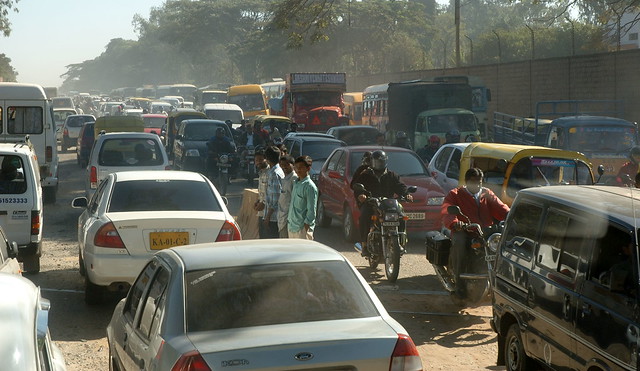
Sunday, May 22, 2011

IP Quell

"How long will this circus go on?", I ask for the umpteenth time.

"Another week", comes the reply.

"Sigh"

"Who would name their club team Indians?", I try to amuse myself again.

"Franchise team....."

"Whatever. It is akin to a football club in my mind. I don't know a football club named 'Versaille Francaise' or 'Dartmouth Brits'. Yet, here it is - Mumbai Indians."

"Dude, Sachin picked that name. He is obviously deeply patriotic. He always plays with the love for this country in his heart. Didn't you see his emotions overflow on winning the World Cup? What would you know....foreign returnee. Football fan."

"Sachin might be God when it comes to batting. But, I am now almost certain he didn't name his kids. Or else they'd be named Bharat and Indu. Are all the players in his team Indian? Malinga sounds much like Kalinga, but I have my doubts about Symonds and Pollard."

"They can play upto 4 foreigners in each game".

"Ok, so they are NOT Indians".

"Stop being an idiot. You think Sehwag is a Daredevil? Wait......in a way, he really is. Ok, here's another one....you think Yuvraj is a Warrior? Wait....he does sound like a warrior. Ok, this one surely...you think Gambhir is a Knight Rider?"

"Haha, that is most definitely the most imaginative name I've ever come across. Knight Riders! That totally killed the buzz I had stowed away in the back of my head about the cool 80s show - crime buster in a dark black car. One dark black car. One and only crime buster. Now suddenly there are 20. And they wear purple and gold. Buzz-kill."

"There is no buzz killing with Shah Rukh at the helm of their affairs. I have no doubt his creative self picked that uber-cool name."

"Please, it's not like Kolkata is to Knight Rider, what Gotham City was to Batman. I thought this was the INDIAN Premier League. Whatever happened to picking names and themes that go with the culture? How about Kolkata Rossogullas? Or just Kolkata Gullas? Ok, I know I suck at this, but there surely is a more Bengali-sounding name? It doesn't need to be Bengali either. Like I appreciate the choice of the name Tuskers - one of the things you associate with Kerala is the Elephant, thanks to the 'Mile Sur Mera Tumhara' video that was bludgeoned into our young heads."

"Enjoy the game. What's in a name?"

"A name is meant for me to tell things apart and to set a context in my head before I appreciate the object that the name belongs to. I can't believe 2 teams are 'Royal' and 2 others are 'Kings' in a league of 10 teams. Seriously, who pays these people for creativity?"

"The creativity is in the stroke-play. In the field setting. In the master class bowling efforts in these torrid situations. I know you can't appreciate that. You are probably still looking for the goal behind long leg and wondering why there are 11 goalkeepers."

"Please, I know my cricket! I used to day-dream for years that I was the Indian Shane Warne, except I was also a hard-hitting middle order batsman. And I basically played the role Yuvraj did when India won the World Cup. In my dreams of course. But, even so, don't insult my cricket-crazy past! I simply bring new perspective."

"Did you just compare Shane Warne to Yuvraj?"

"No, I compared myself to them both. Thank God there is only one Yuvraj!"

"Yes, there is only one. India could do with another for the next world cup."

"Apparently, all it takes to become a Yuvraj-like Warrior is Revital. Which reminds me...when Pune won a franchise for 2011, I was so sure they'd pick the name Pune Peshwas. It just sounds so fresh and revitalizing. Also, so culturally appropriate."

"Peshwas used to live there in the old days. You think there are still Peshwas around?"

"Old is the new new man. Everyone wants Indianized Sanskritized names, except Indians! Seriously, if one team calls itself Kings, and another says 'Kings ah? We are Super Kings!' doesn't it remind you of yourself when you were 3 years old?"

"How do you know the names were picked in serial order and not disclosed simultaneously? You are from Chennai. You should know that there is only one affirmative qualifier used there - Super. It fits perfectly."

"I also lived in Hyderabad. I do remember seeing buffaloes in the Dairy Farm next to our home. I can see how "Chargers" fits Hyderabad now."

"You lived next to a Dairy Farm?"

"It was in the 80s man. Don't read anything into it."

"OK. The 8PM match is starting now. So, stop filling my ears and let me enjoy this encounter."

"A 2nd game? 2 games every day?"

"There are 10 teams now. More games. Now hush."

"When does this circus end again?"

Saturday, May 14, 2011

A Chance for Chennai

Ever since I decided to move back to Homeland and give a career in Chennai a chance, I have been assessing that decision every now and then - not the moving back part, but the choosing Chennai part. Chennai was the obvious choice given my parents decided to retire here. What better place to return to than Home?

However, as I started settling down, I started picking holes with everything around me - the people, the services, the weather, the surroundings - everything except my mom's food! It turned out to be one of those "better than thou" ranting phases every returnee from a foreign land goes through when settling down back at home. I mistook it for a personal vendetta against Chennai (yes, I often "mistake" myself), which it was not. But, it forced me to look closer at the observations I had been collecting in the back of my head about this city and the feedback of other folk about this city. At the risk of annoying a few people, I hereby declare that what follows is the personal opinion of the author, and has deep ties with this blog, but not with Blogger in general.

Another disclaimer - I have lived 17 years of my life in Mumbai, making me Mumbaikar at heart. 7 years were spent in Hyderabad and 2 in Pune. Having warned you, I will now attempt to throw some perspective into some of the more common reasons I have stumbled upon regarding why folks seem to dislike Chennai.

Too Hot!

How hot is too hot anyway? Isn't it all relative? Some find Tikka Masala "tikka", while some others call Mirchi ka Saalan bland. When the mercury hit 40C last week, I was grumbling aloud. That was until I visited Delhi (42C with a Loo) and Varanasi (45C with Loo++). For reference, every degree beyond 40, feels like 10. The Loo in Varanasi was more like "Waterloo" - sucked out all the water you gulped 5 minutes ago.

No Speak Hindi (aka Tamizh TeriMa)

Ever been to Russia? Me neither. But I wish to generalize. They "No Speak English" there as well. Yes, they might understand when you speak to them in English. But, they don't have to respond back in English. It is the same with some Tamizhians and Tamizh - they are proud of their language. Yes, this pride has no place in a sovereign, secular, united country like India. Ever try telling that to the strictly Marathi speaking bus conductor in Pune? "Pudhe chalaa...Aikat naahi kaay tula?" Or is that because Marathi is accidentally closer to Hindi?

If one were to really argue for this pride, you don't need to look beyond a Wikipedia page on the language - Tamizh dates back to an age earlier than even Sanskrit, let alone Hindi or Marathi or English. If the world were ending tomorrow and one had to choose to preserve 2 ancient Indian languages over all else today, the linguist's choice would be Tamizh and Sanskrit. Thankfully, the world only ends in December 2012.

I agree that this blind pride in the mother tongue seems to sometimes slam doors shut on non-Tamizh-speaking people willing to blend into Chennai. It is often seen as prejudice against "naarthies", and at other times interpreted as expressing a lack of friendliness in the people in general. While the former can be explained by following the dynamics of the political movements (read Dravidian Self-Respect Movement) of the region since independence, the latter simply is way too simplistic. Humans in one region of the world cannot be more or less friendly compared to another region. That argument is a non-starter. I tried it against Strangelandians myself, and it failed to stand the test of time.

We visit Germany for a short working stay and strive to learn German. We indulge in English from kindergarten so we can work with the English speaking world (UK+US+Australia?). (Also, so that we can write blog posts in English when we grow up). But ask me to pick up some Tamizh in Tamilnadu or Telugu in Andhra Pradesh and I shall call it blasphemy! "YOU need to adapt to ME and not the other way round". We are better to aliens than to our own countrymen.

Rice is NOT a food group

Neither is corn a food group in Mexico. Nor is fish a food group in Thailand. Geography - one of those subjects in school we never cared for - will explain to you why some regions are more inclined to making some staple food item centric to their diet. When in the US, vegetarians struggle to find meat-free diets on a daily basis, and resort to cooking for oneself. That is too far to go when in another region of your own country. In fact, scratch that. There are simply too many restaurants in Chennai that serve decent non-Rice fare to make this argument relevant. More decent than the fare served in desi restaurants abroad.

Roads are dignified spittoons

Yes they are. I have no clue what makes people spit on the road and then urge others to walk on the same roads. While the spit here down South is white in color and vanilla flavored (disclaimer - I haven't tasted any but my own), move further north and the color turns orange or bright red, is paan-flavored (see previous disclaimer) and leaves a bigger spit-print on the roads. You prefer.

Rude Auto Rickshaw Drivers

Auto Rickshaws don't use the meter in this city, and the price is fixed before you board the vehicle like dowry is agreed upon before a girl gets married. Smartly dressed and looking affluent? Haggling starts at double the normal rate. Speaking anything but Tamizh? Rs.25 foreign language surcharge to communicate with you. Yes, you need immense negotiating skills if you are to ride in an auto at a fair price here.

The awesome side-effect though is that now you get to Save The World. Go Green. Use public transport. This is the secret agenda behind the state government promoting rude auto drivers.

In a hurry and really, really need to take an auto? Use a "Call Taxi" instead. Rude auto-drivers are exactly the kind of extreme adversity that leads to brilliant innovation. We have "Call Taxis" thanks to someone being really keen on solving (making money) off this problem.

Filthy

Pan-India problem. Next.

Big moustaches

Sign of a hero warrior. Next.

Moustachioed heroes

Bhagat Singh anyone? Anil Kapoor? I know, I give up.

Rajnikanth

Dei! Don't make this personal!