Showing posts with label India. Show all posts

Saturday, February 11, 2017

Lessons from a Daily Commute

I drive to and from work for around an hour and a half each day - usually on my motorcycle - on the chaotic roads of Chennai surrounded by aggressive drivers competing for every inch of space. I tried to draw parallels between the chaos I witness on the roads and the journey of a typical startup in the chaos of market forces. My personal goals on the road are much the same as that of a startup - survive, reach your destination in shape and never relax until you get there.
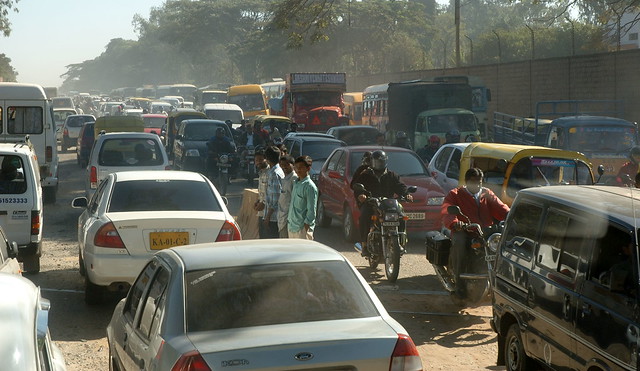
Traffic on Old Madras Road
Photo courtesy: https://www.flickr.com/photos/jace/65091602 under Creative Commons


This is a brief journal of the startup lessons I thought one can draw from such a commute.

Keep Safe Distance

That common sense adage is not just a good safety tip to protect you from ramming into the car in front. It also ensures you can see beyond that car in front of you. Do more than just chase the leader. Anticipate the widening road and rev up to glide past. Spot the buffalo strolling across to block the leader, and swerve away to jump ahead yourself. None of this is possible if you spend your energies staring at the tail lights of the one you chase.

Respect Privacy

 On the bustling roads that take you to work, often it is faster to jump into by-lanes and bypass peak time traffic on busy intersections. These by-lanes are lined by the homes of people who chose to live away from it all. Respect their privacy and avoid honking loud or racing too fast, lest speed breakers spring up through complaints from the residents. Milk your new-found advantage, but not at the expense of your users and their privacy.

Learn to Give Way

There are the obvious occasions where you have to pull up to one side to let the ambulance breeze past. No one likes a jerk, so just do it. Then there are the less obvious occasions where blocking someone in a super hurry might not be the best thing to do. If the chasing car rams into you, you are the jerk competing unfairly. If the passing car overspeeds to oblivion, you are the sagacious plotter who always knew. When you must block to compete, be tactful and look competitive!

Stay Lean, Stay Agile

Potholes. Patch up jobs after overnight cabling work. Stray animals looking for food. Sand and stones overflowing from a road side construction project. An idiot coming at you from the wrong side. How else do you dodge these challenges but by remaining agile? The swerving and slaloming is easier if you are also on a lean machine. Maybe that is why I prefer a motorcycle rather than a car to take me to work.

The typical Indian commute is never far from chaos. What other startup lessons can you draw from your daily commute?
Saturday, August 13, 2016

Persistence wins Mannequins

As a visual medium, cinema continues to capture our imagination, bind us into a story and take us on journeys we never thought possible - all in under 3 hours. As a visual medium, cinema also silently influences the masses, sometimes consciously, and other times subconsciously. That influence is both a powerful boon and a dreadful bane. While I don't insist on only making cinema to preach goodness into the people, I do have two sincere requests to those who make our Indian movies.

It is 2016 - please weed these out of your movies already.

If you persist, she will say yes

It's simple. You like a girl? Just keep pestering her. Stalking her. Get to her friends via other friends. Sing songs to her. On the streets. In college. On the phone. Never give up. Prey on her mind. Eventually, she'll be yours.

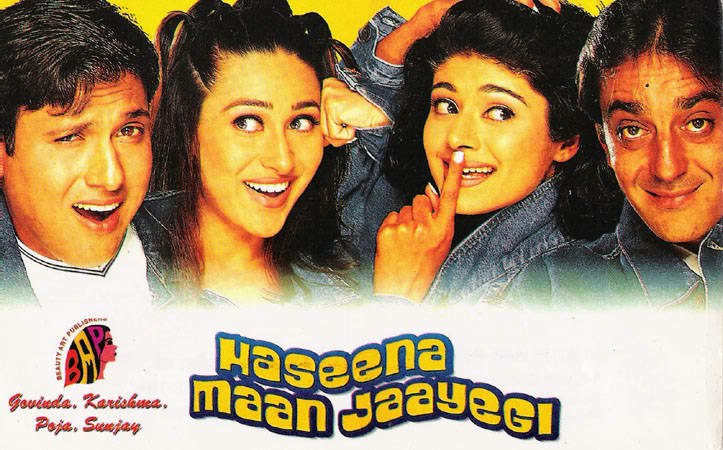
Every "hero" you can think of, has portrayed in reel life what would amount as "eve teasing" in real life. Think Shah Rukh in Dilwale Dulhania Le Jayenge. Salman Khan in Wanted. Govinda in almost every movie.


Please put an end to this rigmarole. People die because the idea catches on. 

Mothers or Models

Struggling to list a handful of movies where a strong female character, or even a realistic female character was portrayed? Producers do have massive challenges reaching the masses in a patriarchal society. Woe betide the one who puts a woman in the forefront. Who would pay to watch that? 

Since I promised not to force movies to preach to the masses, I will stick to the Model problem. Male actors don't really need to look young or hot. They just need to be good actors. Why do we have a different bar for females? Like the beautiful landmarks songs are shot in, the hills and forests and oceans in the background, female actors only need to dress smart and look pretty, and carry home a paycheck. 15 minutes since the last song? Time to roll in our pretty thing. Too much drama and seriousness? Time to roll in a hot one.

Can we please stop using women as mannequins? They are real people. As real as the men who are portrayed in those same movies. And have their own stories to share. 

Please put an end to this rigmarole. You certainly don't want your daughter to think she is worthless because she isn't pretty enough.

PS: Hat tip to Siddharth for breaking the mould.
 

Tuesday, April 14, 2015

A Highway To Hell

Telecom operators control our access to the Internet, but have recently started to challenge the openness and the content-agnostic nature of the world wide web claiming it affects their bottom-line. Should we care? Here's my take on making sense of all the #NetNeutrality fuss using an analogy.

The State and Central governments in India have long been unable to sufficiently fund road and highway-building projects in the country that are key to connecting producers to consumers and disparate communities together. The solution they arrived at was to invite private entrepreneurs to build this infrastructure on a Public-Private-Partnership model so that the projects did not wane for want of public money. In return, the private investors were allowed to charge a toll for all traffic that passed through the roads they setup. Just so we are clear, the roads were still defined as public property. The builders were only allowed to milk their investment for a finite period, usually between 5 to 15 years.

The results are clearly visible around us. Some of the most modern highways we are proud of today were built using this model. Travel times were cut, fuel savings were achieved, value was delivered to both producers and consumers of goods and services who previously could not connect with as much ease.

Toll Plaza Ahead

When you pull over at a toll booth, you pay based on the size of your vehicle. Cars pay less than SUVs which in turn pay less than trucks and buses would. The toll is defined to tax heavier vehicles and ones that can carry more load more than the lighter ones. Sounds fair, right?

One fine day, an established road-preneur starts wondering how they could make more money out of their investments. They look at statistics about the kind and count of vehicles that pass through their toll-booths. "30% heavy trucks! I wonder what they carry?" A little more investigation reveals that most trucks are carrying raw materials like fruits, vegetables, minerals, sand from producers to consuming industries. These industries then ship their finished goods out, some of which again pass through the toll-booths.

The Revelation

"Multi-million dollar companies would have no market or raw materials without my roads!".

This is when a smart, canny road-preneur hits upon a novel toll scheme. Tolls are charged not based on the size or load of the vehicles, but on what's inside them. People can travel for free. Cars and buses only have to pay a nominal fee - way less than what they are used to paying. 70% of the traffic is now elated! Essential goods can also ship for free - milk, medicines, vegetables, grain. How benevolent! Everything else will have to pay extra to be shipped past the booth. Iron ore, sand, cement, steel, food products, dairy products. This is how the road-preneur gets a share of the gravy train the industries around the roads have generated.


The New Order

Industrialists start to get apprehensive. Their production costs are shooting up. Some distributors won't take their goods anymore. The road-preneur senses another opportunity. For a handsome price, a good producer can ship their goods past the toll-booth to distributors for free, forever!

Not all industrialists can afford the handsome price. Only the large ones can. Groceries have fewer selections on the shelves. Construction companies have to deal with cement and steel monopolies. Prices shoot up everywhere.

And then, the road-preneur decided to go too far. For an incredibly handsome price, trucks loaded with smuggled weed and cocaine would pass through free and hassle-free at that. Despite inspecting the contents of the truck, the toll-booth operators would turn a blind eye and not report this to the local authorities.


Up In Arms

Roads and highways are a public property, no matter who constructs them. The Internet is the same. A property for all of humanity.

Road-preneurs were given the land they built on, which was again public property. Telecom operators rent the public spectrum to build their infrastructure on. They lay cables under our lands.

For their hard work and enterprise, they will be rewarded with a means to extract a profit by tolling the traffic on their roads. This is as far as we can allow them to go. Charge by load. Not by content. Not by clout. Or by any other metric that makes the roads more accessible to one over the other. Telecom operators are also handsomely rewarded for connecting us to the Internet. Charge me by data. Any further, and you risk becoming a social evil.

Take Action today. Don't let TRAI be bullied by the vested interests of telecom operators. Save The Internet.

Sunday, May 18, 2014

Wishlist For The New Government

I did not vote for you, but I did vote. I pay my taxes. I am a citizen of this proud country. Like all other citizens, this is now my government. Whether you read this or not, I have expectations of you. Here is my wishlist.

Don't reform just for the sake of it. Don't open up FDI without analyzing how it affects the masses. We don't want a local Walmart just because. Don't just simply pump money into infrastructure. Instead, have those who yearn for better infrastructure participate in this initiative. You set the business environment. You don't need to setup the business infrastructure.

No more free power, water, land to IT companies. They've milked the tax payers enough. A single Indian Railways employs half as many as the whole IT industry.

Don't ape the US. They are not worthy role models. They snoop on you for heaven's sake. Many leading American economists question their gung-ho capitalist model. We don't need a recession to prove our aping wrong.

Back all your work up with data and models. Hire statisticians on your policy-making panels. Have them predict trends and prove which models will yield expected results before we deploy these policies.

Be Open. Share everything. How decisions are made. How individuals are selected on panels. I should be able to Google anything about your work and land on a .gov.in page. Share information about all subsidies for social schemes and sops given to big business. Let there be no doubt about whether we really are running a socialist government.

Auction everything owned by the citizens. No more doles for non-enterprising businesspersons. Bribing a statesperson or being their relative does not qualify as enterprise.

Increase the scope of e-governance. Make the middle-man obscure. I don't need a passport agent today. Push further. Bring everything online. I would rather not meet a "Babu" if had a choice.

Plug leakages in the PDS system. There are systems that have proved this is possible - Gujarat and Chattisgarh. Ape them.

Bring in universal PDS. You can never be completely sure who is not poor in a majorly poor country like ours. Don't guess. If a few non-deserving families benefit unduly, it's not as big a deal as deserving families being left out.

No more rotting grain due to a lack of storage facilities. Is there any greater sin to let this happen when millions starve each day?

Be pro-entrepreneurship. That is not the same as being pro-business. Make starting up easier. Provide a path to failure for those who wish to learn building something. Entrepreneurs will build those bricks for the foundation you want the future India to stand on, not your Ambanis.

Job creation through entrepreneurship not MNREGA. MNREGA is a band-aid. Not a solution. Entrepreneurs add jobs through their enterprise. They disrupt old norms that don't fit anymore. They create new markets where none existed. They need hands to help them get there. And so they hire. A 100 entrepreneurs will hire more over 5 years, despite a high failure rate, than your pampered big business bullies.

Internet connectivity to every school. This is how we will bring quality lectures to those who don't even have teachers. Enroll volunteers to dub lectures to local languages. Even better - maybe an entrepreneur will figure out how to monetize this. Post everything on YouTube. No barriers to education.

Abolish diesel subsidies completely. Enough bad smoke has filled our skies from folks riding 4x4s running on diesel. They can easily pay double to do the same.

Be pro-agriculture. Make farming a more attractive proposition for those who want to farm. It's not just that agriculture is a traditional occupation. We need self-sustenance and food security for stability at the large scale the second largest population on the planet desires.

Promote organic cultivation. Encourage agri-institutes to R&D and publicize "green" farming practices that ensure long-term food security.

Measure development not by economic growth but by "social mobility potential" - what sort of opportunities are available for upward mobility for those at the bottom of the pyramid.

Prioritize businesses that deserve sops based on long-term objectives. Like combating climate change. Ensuring energy security. Socializing education.

Protect the wild. This is not a nation known for plundering forests. We are historically oriented toward maintaining balance with nature. Empower those who care for our flora and fauna. India is more than just its billion-plus humans.

No more politicians in sport. We need them to take care of larger national interests - not run fiefdoms within sport. Sharad Pawar cannot simultaneously be ICC chief and agriculture minister. Let more sportsmen and businesspersons run sport - bring strategy, experience and business initiatives to sporting bodies.

Invest in citizen security. Pay our police fairly. Make their lives better so they can make ours safer. I'd rather my tax money went to them rather than to sops to big business. Train our police to investigate, coordinate with national security agencies, learn to use modern technology. It is not OK that innocent citizens continue to be blasted away without their families and friends ever receiving justice.

Push businesses to invest in R&D in tie-ups with universities. They cannot continue to sit on the outside and grumble about the poor quality of higher education institutes.

Stop bowing to the West in Climate Conferences and Trade Agreements. Despite their charity toward poverty-removal schemes, they don't give a hoot about poverty alleviation as soon as it directly conflicts with the interests of their own big businesses. You watch out for our best interests. Always.

I would like to believe these are the expectations of not just myself. I would like to believe they belong to an India where our aspirations are no longer bound by reality, but by the dreams the openness of the Internet has exposed us to. It is up to you now to involve us in making these dreams come true. We are here to help. You have our support. Show me what you can do.

Saturday, June 02, 2012

I Apply Therefore I Am

"An engineer is a professional practitioner of engineering, concerned with applying scientific knowledge, mathematics and ingenuity to develop solutions for technical problems." - Wikipedia.

Application. Problem Solving. That is precisely what engineering is about.

In the 4 years that I spent studying engineering however, there were few examinations that actually required solving problems ingenuously by applying knowledge acquired during the course of studying the subject. The only knowledge engineers in India need to possess is the fact that if you spend enough time practicing questions from the last 5 years' papers, you will emerge unscathed into the next semester.

So exams as a medium of testing application is thrown right out of the window. There used to be a saving grace however - the Final Year Project. Your one chance as a future engineer to completely embrace and understand a problem, design and implement it (if you are lucky, with valuable guidance from an able guide), and then proudly present to a jury what you have accomplished in one year.

Revelation

Over the past few months, conversations and interviews with young software engineers have woken me up to a reality apparently everyone else already knew about - no one does their Final Year Project on their own anymore. Well, almost no one.

Open a candidate's resume, find the Final Year Project title, and a quick Google search will reveal two things -
  1. There is a paper published in an IEEE journal with the exact same title.
  2. The project is available for sale at one of the local software training centers.
Teams of four are still formed to "execute" a project, but their members contribute more in terms of chipping in to the pool of money that will be used to purchase a neatly prepared, gift-wrapped project, complete with printed theses and presentations.

Bring the project up in an interview, and 2-3 basic questions later, it is already clear the candidate has no clue how to solve this problem. An excuse or two about amnesia later, the truth bundles out. This is followed by the familiar adage of "everyone does this".

How the examining jury does not realize this project was bought off the shelf like candy is beyond me. Perhaps they have also bought in to the "everyone does this" routine.

Certified To Be Trained

The monolith that is the Indian IT industry has long ago accepted the fact that engineering degrees count for little, and that every single fresh hire will need to be put through the paces of a training regimen. This has in turn lulled our future engineers into the belief that they do not need to apply or prove anything in their 4 years.

Why bother when you will undergo training in DotNet and Java anyway once you have been selected? Focusing on spoken English, aptitude tests and a decent score-sheet tend to pay off more handsomely in these interviews.

Solution At The Root Of The Problem

While not placing the blame squarely at the door of the Indian IT monolith at large, it is hard to see beyond it to find where the problem begins. Being a services based industry, it requires tens of thousands of employees each year - something that has obviously not gone unnoticed with ambitious parents who wish to bring up engineers, and the mushrooming new engineering colleges across the country. This has led to a side-industry of helping students push through the 4-year hurdle of getting a degree - first came the coaching classes, and then the "project training centers".

Instead of, or perhaps in addition to, running enormous training facilities for new hires, why do the behemoths of the industry not actively encourage final year students to take up projects with them? This has the triple impact of improving the quality of the engineer that passes out, while at the same time selling your organization to them and giving you prime access to the cream of the lot.

There are logistical issues to work out, but who is to say that students who can fund their purchases for off-the-shelf candy cannot instead spend on frequent visits to the closest office of a behemoth? Cash spent on grand recruitment schemes could instead be diverted to attracting more students directly from colleges to work on projects and prove their worth on the job, without having to pay them. This is not even close to being an original idea, but I am surprised it isn't more actively utilised.

No More Free Lunch

I like to repeat this. The day isn't very far when just like work migrated on the outsourcing silk route to India, it will migrate further to cheaper locations. When that happens, we either work on projects demanding a lot more application and problem-solving or build products for our local market, that again demand application and problem-solving experience. Both our behemoths and our engineers need to gear up for this eventuality. It has probably already snuck through the door and is hiding behind the couch.

Saturday, May 19, 2012

The Software Chef

Imagine reading a 5-star Chef's resume. Now imagine this resume was written by a software engineer. The resume would typically have a section called "Skills" that would read something like this -

  • Pots, especially flat-bottom ones
  • Pans.
  • Ladels. Expert in wooden ones.
  • All kinds of ovens, including microwave.

If you now imagine yourself tasked with hiring a new 5-star chef for your restaurant, would this candidate be your prime target? No? What were you looking for in the resume? Did you expect the skills to read something like this instead?
  • Expertise in sous vide.
  • Learning and following traditional recipes.
  • Baking
  • Innovating with cooking techniques for fish
  • Presentation of food
  • Working under pressure on busy days

Then why do most resumes for software engineers read like nothing more than a laundry list of projects participated in and tools/languages utilized? Here's an example of a Skills section from a typical resume.
  • OS: Windows XP/Vista/7, Ubuntu, CentOS
  • Database: Oracle 8/9/10, MySQL
  • Languages: Java, VC++
  • Scripting: Shell script, Batch script, awk
Tell me about the journey, not the route
You worked on a project for the single largest bank in the world. But the team consisted of 50 people. Now how does one understand what your individual contribution was? You don't expect to be hired because you were on a team with 49 other people working on a huge bank project. Wouldn't you rather tell us what you learned along the way? What challenges did you overcome, either as an individual or as a team?

You worked 3 years on 15 DotNet projects for various customers. But how does one understand the challenges involved reading a description of the project in marketing lingo, probably pasted from the customer's website? What did you learn that you can apply in a similar project that requires using Python-Django-HTML instead of DotNet? How to design for scalability perhaps? How to interact with customers to improve usability maybe?

Think beyond the pots and pans
It would appear to be the single-minded focus on developing thousands of "workers", which is in the very nature of the software outsourcing industry, that is behind this fixation with brand names and technologies in a resume. Engineers are trained to become a Java Ninja or a MySQL Samurai, as opposed to becoming a Systems Engineer or a Database Architect. Eventually, with sufficient "rinse and repeat" cycles, engineers start associating themselves with the tools, not the problems they were intending to solve.

If you were really a 5-star chef, one would expect you to deliver nearly as good a result with the limited resources available in my humble kitchen at home as you do in your well-stocked restaurant. "Oh, but I can't do this without a microwave oven" will normally be treated with suspicion. Yet, I come across many a software engineer who say they are loathe to programming in Python after 5 years with Java.

"What happens to all those years I spent learning Java?" The simple answer is, if you spent 5 years learning how to use the sewing machine, then you might have missed out picking up the nuances in the art of tailoring.

Evolve, or dissolve
Are you prepared for a day where there may be no one using DotNet? Where the "Cloud" is the platform, and no one cares about an OS anymore? Where your software must run with similar experiences on a laptop or a tablet or a smartphone? Where all outsourced projects go to Vietnam or Phillipines, and we must build products for our own market instead? Where you are expected to be a problem-solver rather than a technician? After all, that is what an engineer was supposed to be, right?

Saturday, August 20, 2011

Build Bottom-Up, Clean Top-Down

Some problems are inordinately so complex and huge, that it is natural to break them down as a human to be able to comprehend and begin to solve them. There are two major approaches that will immediately settle in your mind once you attempt to comprehend a problem - top-down or bottom-up. Some problems are suited to top-down analysis, whereas others naturally incline themselves to bottom-up perspectives.

Building


When you set out to build something from scratch - let's just say a skyscraper - you start from the bottom. You dig deep into the ground, lay down a firm foundation, and only then start building upwards. How high you can go is directly dependent on how firm and deep your roots are. That's how trees go naturally as well - bottom-up.

Cleaning


Imagine attempting to clean your home - completely, including the ceiling, the ceiling fans, the walls. You don't start with the floor now, do you? You realize that sweeping the ceiling and pulling down cob-webs will pollute the floor anyway, so you decide to do that last. Ceiling, ceiling fittings, walls, wall-hangings, floor. Top-down.

Nation Building

Building a strong nation must indeed follow the same principles, to a layman like me. Firm grassroot institutions that look after the most underprivileged and most populous sections of society - Gram Panchayats, agricultural credit institutions, rural employment schemes - are the foundations on which you build the nation. Are these our strongest organizations today? How long can a nation stand strong with its weakest but most sizable communities being undermined?

Nation Cleaning

Ridding a nation of social evils like corruption is very much akin to cleaning, to a layman like me. Indeed, "cleaning" and "corruption" are often metaphorically used together by most observers. While it is indeed apt to ask people to stop giving bribes to get favors like a driving license or a college seat, we ought as well to notice what holds this culture of corruption up.

Is it really ingrained in our psyche or is it the system that requires cleaning? If it is the latter, does this not require a top-down cleaning then? Once I, as a guard to the manager's office, realize that the manager doesn't accept nor encourage bribes anymore, will I not think twice before harassing someone intending to meet my manager? Are people motivated by morality of peers, or the morality of their leaders? Should not the Prime Minister be open to examination for corruption just as me or you? Should not the cleaning commence from the top and make its way to the bottom?

Sunday, June 12, 2011

Searching for Research

The debate has cooled. The media's glare has turned away. Everyone returns to more pressing issues. But, the verdict has long been announced - The IITs and IIMs are not living up to the global standards we expect of them. Why? Because the number of research publications coming out of these places are paltry compared to the MITs and the Ox-Bridges of this world. Heck, even Tianjin produces more publications from China. While we are at it, the teaching faculty sucks as well.

Disclaimer:
My only association with any of these universities was during a 2-year M.Tech program at IIT, Bombay. I have never set foot in an IIM or for that matter any other IIT. Nor have I checked out the other institutes that are deemed "world-class". I shall therefore focus my point of view only through my brief interaction with IIT Bombay.

Mission IIT

The process of conception of the IITs had started prior to Independence, and as noted on Wikipedia the intention of foresighted leaders was indeed to pursue technological and research prowess for a newly independent nation. The model however was one where a Council of Scientific Research would be at the forefront of the scientific pursuits, while institutes like the IITs would produce a trained workforce to man these laboratories. The Indian Parliament also declared these institutes as "Institutes of National Importance" that would train engineers for the massive infrastructure development and related projects a new-born nation would naturally need to undertake.

The emphasis therefore was on producing engineering graduates primarily through the now famous B.Tech program. The other programs basically mushroomed from this system that was for so long completely funded by the government. To say that the Masters and Doctoral programs were simply step-children to begin with would not be an overstatement.

Train, Drain

Under-graduate students are typically not motivated to pursue painstaking research, and pursue problems that require patience and endeavour. The IITs sought only the smartest young students to join their B.Tech program, and these were funneled through the rigorous and well-renowned Joint Entrance Examination (JEE). One can bump into some of the brightest minds, a few of whom are indeed even over-achieving for their age, on a casual stroll through the campus. Yet, mysteriously for some, these bright minds do not result in an over-arching number of research publications and innovation coming out of these famed institutes.

The reasons are varied, but sometimes plain to see. So many of these brilliant kids hail from the remotest parts of the country and come from families that are barely middle-class. These kids are highly ambitious, but their priorities are naturally more inclined toward stepping out into a financially secure way of life. They are well aware that the "IIT stamp" is a game-changer, and one of the single biggest influences in their careers. This career pursuit might involve a job right out of B.Tech or moving on to an MBA from an IIM. A few will undoubtedly yearn to move into advanced research, but they quickly conclude that this is not what the IITs were primed to help them do, and fly westward. I personally know some bright prospects, who even landed medals at Physics and Math Olympiads, that settled for plum jobs right after B.Tech. I do not blame them, but the fact of the matter is that in our country a career of research is not yet perceived as a financially stable choice.

In a way, the B.Tech program is indeed delivering what it was designed for - brilliant engineers. Whether we truly reaped all the benefits is debatable.

Shouldering the burden

The burden of research in the IITs then falls to Post-Graduates and more importantly to those who decide to further carry their work into a PhD. Most Post-Graduates can primarily be defined by the attitude - "I wished I could crack the JEE, but I will get into an IIT through the GATE anyway". The IIT stamp is simply irresistible. You cannot test for an inclination toward research in a candidate. You can only hope to entice or motivate them to pursue greater goals.

While some M.Techs will publish a paper or two on the way to a cushy technical job, a handful will actually be motivated to take their research forward and ensure it bears fruit through a PhD program. The professors are not incompetent, and many have previously taught in prestigious universities in the US. They work through pressures of having to meet stringent research goals set by the administration while simultaneously dealing with the problems of landing dedicated, research-minded students to work with.

Remember, that all this while, these researchers are working with barely any investment from the industry. In my 2 years, I only saw one keen investor in the research pursued by our Computer Vision and Graphics lab - Defence Research and Development Organisation (DRDO). The Indian industry has only just moved on to innovation, and we should see more technology tie-ups with the IITs in the future that pump money behind research. Until then, the research carried out at the IITs is mostly driven by the faculty and students' individual interests and can very often be fruitless.

Research is an attitude

While it helps to have brilliant minds to solve difficult problems and innovate, innovation, especially one that requires a lot of research, is often more about discipline and perseverance. You will require flashes of brilliance to leap over what seems improbable, but you will also need the will and rigor to help you through the rough patches where you seem to have run into a wall. Most B.Techs, and many of the M.Techs, do not possess this rigor. Their minds are already set on the IIT-degree-fueled career path (which is not wrong in itself). Why do we expect them to contribute to academic innovation?

Yet, there are shining examples that I had the pleasure of working with myself, who have contributed handsomely to that meager research and journal publication count that Jairam Ramesh is using to conk the IITs. Biswarup Choudhury has published in the world's leading computer graphic and animation journals - something that has never been achieved before in this lab. Where are the opportunities to fund further innovation? Not here. He has had to continue his work at ETRI, Korea. Aniruddha Joshi took up the problem of reviving the ancient Indian diagnostic system of "Naadi Nidaan" - studying the pulse to diagnose ailments - when he was still doing his Bachelors in Engineering. He converted this passion to develop a digital system based on the ancient methods into a full doctoral research problem, and went on to present his work in a number of internationally acclaimed conferences. His research is supported by CSIR, Pune, in the true spirit of how scientific innovation was first envisaged by the founding leaders of our nation.

Give it time

The IITs are barely 50 years old (except for the first of them - Kharagpur). It is not fair to compare them to the MITs, Harvards, Stanfords, Ox-Bridges of the world that have watched centuries switch on the calendar. Not yet. These institutes also have the unique co-location of innovative industries ready to fund all interesting research. India is only warming up to innovation after a nationalistic surge of freedom after independence, followed by the lull of the socialist policy era. It may not even be wise to compare this to the Chinese universities, where an autocratic iron will can force nationalist agendas through without opposition. Yet, it is inevitable that the Chinese output will indeed be the first benchmark we will aim to achieve, in due course of time.

More India-centric innovation, more IITs, more industries sprouting around the IITs, and a larger aspiring middle-class to contribute innovative researchers to these institutes - the stage is quickly getting set. How far can the future be?

Sunday, December 07, 2008

Reactive, Or Proactive?

It was the 26th of November, and I had a day off work as I was flying out from Austin toward Newark to spend the Thanksgiving weekend with relatives from Mom's side. The news scene was calm when I left home. 6 hours later as I land in Newark shielded from the real world in the confines of my airplane, my sister calls up to tell me there has been a dramatic change, and looking at how the events unfolded since, it is clear not much will be the same again.

At the airport, people watched as CNN splashed pictures of a burning century old Taj hotel, by the side of which I have walked so many times, but never ventured in. Reports of a massive operation by infiltrators who breached the shores of India's financial capital, my home for over 17 years, using boats, poured in as I stared in shock. CST railway terminus, which was where we would get off to go watch a movie at Sterling or Regal, was splattered with bodies and bloody trails of cold-blooded murder. Of all the places attacked by the cowards, the brutal mindless slaughter at CST where 2 men with guns simply sprayed bullets and lobbed grenades into the 10PM crowd, hit me the hardest, although the Indian media begs to differ.

Global Exposure

Living in Strangeland at this time gives me a different perspective of the reaction to the attacks, one from the same country that faced its own attack on its financial hub on 9/11, and responded in kind, and more. The widespread coverage on CNN, all day long, over local US news really is unprecedented. It surprised me that they deemed it important enough to cover the story as it unfolds, given the apathy of Strangeland toward anything that does not concern themselves directly.

It was clear then that the terrorists had achieved their motives. Their blasts were loud enough to be heard all across the globe. They targeted foreigners to ensure the international media paid attention. Not many international businesspersons will see India as a secure place anymore, at least for a short time. Strangeland tried to find a link back to itself - the epicenter of global interest - as it always does. Theories tying the attacks to the change brought about by election of Obama were thrown around, but not for long. When the links to Pakistan were loud and clear, there was only one voice - Pakistan is a rogue state and at the crossroads of all terrorist activity in the world today.

Local Excesses

It is understandable that people are stunned, hurt and angry. I plead guilty of belonging to the same club myself for a while. People want action, immediate results and solutions, a boost to the confidence of walking freely again in their own streets. Television screens and newspapers and internet blogs are awash with nationalist fervour demanding instant karma, and booing the government for its inaction. The only problem is that there is no quick fix to this madness. It's hard to realise this when one is possessed by hatred, and emotions blur all sense of reason.

All it took for me, is my brother to ask a simple question - "So you think a war is the solution?". Going on a hunt to find and, to use Bush-speak, "smoke-out" the perpetrators of such violence will only make us exactly like these terrorists themselves. And who is to say this will have achieved anything, other than a false feeling of security? It can only breed more hatred against India, which most people in the world today see as a peaceful nation.

Lessons From The Recent Past

One only needs to look at Strangeland and their reaction after 9/11. Two heavily funded wars, thousands of soldiers lost, almost a trillion dollars burnt, economy in ruins, and what is the state of terror in the world today? Yes, the American shores haven't been breached since, but clearly, the war on America has moved elsewhere - Iraq. The deaths of thousands of innocent civilians in Iraq and Afghanistan do no good to the American image in the world - especially the Islamic population. How can Strangeland claim to be better today than the enemies it fights?

Einstein once said, although not related to this context, that "Problems cannot be solved at the same level of thinking that created them". How can we stoop down to the same violent tactics and mindless slaughter, in the quest to eliminate terror, that the terrorists themselves apply? Who is to say that since we claim to have better intentions and seek the greater good, we are more righteous in our actions? Is there a way to leave all the innocent people, who want nothing to do with these activities, out of this?

The Indian Way

There is only one way to tackle the problems India faces - the Indian Way. That is the way we fought for our freedom, and that is the attitude that ensures billions today still look up to India for its peaceful outlook. Just last week my cab driver from Ethiopia smiled back at the mention of my Homeland, because of his image of the country, and his interactions with his teachers who came all the way from India to teach in his schools.

The Indian Way does not mean we turn over the other cheek and wait for the next slap. Its essence lies in the statement - "Despise the action, not the doer". The problem of terrorism cannot be solved by finding and eliminating all the people involved. That is just too simplistic. One has to locate and weed out all the sentiments that lead to such inhuman acts and try to address them at the same time that we take steps to locate the actual actors involved.

Of course, if a war is forced upon us, we will fight like we have 4 times before, to protect our sovereignty. But, a war initiated as a remedy is not the solution, ever, to any problem. If anything, it sows the seeds of more problems for the future. With India's economy booming, and the world watching, do we want to bankroll a war and take ourselves back by 20 years? Won't a war really be a victory for those nasty terrorists who ploughed through Mumbai? The attack on the financial hub of India, will eventually have then led to its economic demise.

To sum it all up, here's a little incident. At a comedy club in New York, a few days after 26/11, the host found me, an Indian, in the audience and said "I can't understand why, when there are a billion of you guys, you don't just go over and kick Pakistan's ass". Everyone laughed. But we know the answer, right? Cos we are not Strangeland.

Saturday, October 25, 2008

Destination Moon

Another date was just added to the long list that Indians like to remember. Along with the birthdays of great leaders and deities, historic and mytholigical events, 22nd October 2008 will hopefully be another date that brings a glow to every proud Indian's face. For on this day, India joined the elite club of nations that have sent a mission to the Moon. Chandrayaan-I (which literally means "vehicle for the moon"), at the time of writing this, is in an orbit around the earth with an apogee of around 76,000 Kms, which will be increased in 3 more bursts to put it into the grasp of the Moon's gravity and subsequently in an orbit around the Moon.

The Moon? Why not Mars?

This was the first question shot back at me as I disclosed this well-kept secret to colleagues in Strangeland. Not surprised at the obliviousness to activities outside their "well". However, good question.

When the "Cold War in Space" was going on between Strangeland and erstwhile USSR and they were racing to get to the Moon, Indian scientists were still literally in their diapers trying to launch rockets that breach the atmosphere. After all, we were a young nation recently freed off Colonial rule and grappling with the teething problems like poverty, population control, self-reliant economy, that we still fight to this day. The Indian Space Research Organisation (ISRO) began by launching weather and communication satellites using the launch-services of other nations, and gradually perfected the art of launching satellites themselves with the Polar Satellite Launch Vehicle (PSLV), indigenously developed over the years.


It is clear that for a nation that does not have a free flow of green bills to fund research, a small, less risky step to establish itself in the space fiefdom is better suited than to blast its way into the "We've been to Mars" club. Former president Dr. APJ Abdul Kalam, a revered national hero and scientist, also urged ISRO to shoot a probe to the moon and mark the silver soil with an Indian flag, anticipating a race in the near future to exploit the Moon's resources. After all, the responsibility to tend to almost a sixth of the world's population requires such forward thinking, doesn't it?

Does a moon mission feed the hungry?

One of the boiling controversies around the world has been whether the $86m spent on the Chandrayaan-I mission is criminal given the fact that over 200m children in India are undernourished. I am not sure if these are comments from self-righteous trolls from the West who think they have a handle on all their social ills. Maybe it's burning envy that leads to such comments. It is too naive to look at things in such a narrow perspective. With this argument, India should also abandon all the huge sums of money spent on any kind of welfare like education and first ensure children don't die hungry. Agreed the problem is severe, but space research and technological progress are not antithetical to welfare.

Studies in Strangeland have shown that the huge amounts spent on NASA have more than paid back on the investments in terms of technological spur, motivation, and introduction of new economies around the sector that feed off the scientific advancements. A few years ago, bright Indians graduating from prestigious institutes would look around for opportunities, and shrug their shoulders and fly abroad to greener pastures. How many of those will now be forced to think twice, and be motivated instead to join institutes in India?

As for the Indians who oppose the money spent on Chandrayaan-I, I only have this to say. Stop watching cricket, feeding the mammoth economy that spins money around the sport, and wastes resources including time and moolah. Stop overpaying the whole cricket system, from the players to the babus. Where is the national pride in that sport anyway, however hollow? How many more children can be fed by sacrificing futile cricket investments?

Strangeland, strange response

The one news article I caught on CNN related to India's mission betrayed yet again the jingoism required here in Strangeland to maintain high confidence in the face of despair. Announcing the mission to the viewers, the news item quickly moved on to China's (the new communist foe to observe and overcome) recent space achievements, and asked why the US has stopped its missions to the Moon at a time when everyone else seems to be on the bandwagon. It was finally wrapped with a chest-thumping cry - "Cos we've been there, done that, almost 40 years ago!". Strangeland is clearly wary of the Tiger and the Dragon.

Here's wishing everyone involved in the mission to the Moon - you make us proud!

Tuesday, July 10, 2007

Push Pa For No Dowry

I am proud of my country and its rich heritage, the traditions, the spirituality embedded in every aspect of life and the fact that all of this has survived the test of time in a melting pot of the most diverse cultures one can find in any single country. But, at the same time, I despise belonging to a society where the masses still adhere to cooked up practices that no one understands, but everyone accepts. One of the most widespread of such practices is the tradition of dowry for a marriage.

Buy my love, love

Marriage is supposed to be a sacred bond between two bodies and souls that get tied to each other for eternity - as they say in those Western marriage vows - in sickness and in health. When it does sound so much as a pillar of strength and equality, how the hell did the concept of dowry fit into the scheme? Why does the bride-to-be have to pay her husband for his "services"? Last I checked, most men actually end up getting the service - both with their demands in the bedroom and with the daily household chores, and after there are kids in the house.

I don't really know when and how this tradition took shape, and I don't even care to research and find out, because what it has ended up becoming is a totally inexplicable farce. My explanation is that the woman has always been seen as the weaker sex and one needing protection. When she is born, she walks into the loving protecting arms of a father. When he finally hands her over to another man, he hands over the responsibility of protecting and caring for her, and ends up paying a price.

Not many fathers have qualms about this, as they do not want to risk taking on the orthodox society they live in. Or worse still, because they have themselves received a dowry once upon a time. Not many girls raise their voice as most women still don't consider it right to speak up against the norm for fear of being outcast and bringing shame to the family. Hell, she instead turns into a bride-burner herself! Dowsing the newly wed bride with kerosene and lighting the match after an unsuccessful demand for more dowry.

What does education have to do with this?

Nothing, apparently. The practice is as prevalent in cities, as it is in the villages. Some urbanites actually pride themselves in "preserving the culture" in the face of invasion from western thoughts and this preservation naturally involves sticking with age-old practices like dowry.

I was never more shocked than when I brought this issue up with my fellow classmates during my Masters. It should be noted that these guys are some of the brightest young people around who have been afforded the chance to go ahead and get the finest education possible in the country. But when it comes to the issue of dowry, they were still massively orthodox and openly accepted that they expect a dowry, and that in fact, since they have had the privilege of studying in the top technological institute in India, they expect to land a fat one. Ask them how it is justified, and pat comes the reply. "My parents spent a fortune getting me this higher education, and I will ultimately end up earning more because of that. Hence, I need to expect a higher dowry." I persist, "But, why expect a dowry at all? Never mind the size of it." The reply has the same tone, "Who will repay my parent's efforts?". I am pissed by now - "Who will repay the girl's parents? Don't you know that the girl today also studies as much as a guy does? How can you not be ashamed to ask for money when you will never have less because of your pedigree?"

There are other explanations I hear too. "Girls have high expenses, dude. Her parents will have to cover for that." "My parents didn't find it wrong, why should I?" "We will be paying for my sister, I should get some back." Just to add spice to all this, I should let you in on the figures I heard. Try 50 lakh rupees for size, will you? If all this doesn't sound absurd by now, you are most likely part of that elite gang of thugs.

Save for the marriage, not retirement

Being a girl's father is sometimes cursed in this sense, as is being born a girl child. The minute you are born, daddy decides to start saving on that marriage fund. Even though he may want to raise the girl as well as he would raise a boy, he will still make compromises. Fewer girls make it to higher studies this way. Its a toss-up between spending on education and on the marriage, both once-in-a-lifetime events. I need not say more here. If you have a sister or better still, are one (!), you probably know all about this woe.

Hellraiser

What can one do against a whole society of orthodox beasts who clamour for a slice of the pie everyone can get their hands on? We can pass legislation. Oh, but that's already been done. No one comes clean against the offenders, and no one testifies, so according to the law, it doesn't happen. I, for one, am definitely going to be invited to a lot fewer weddings, because I have threatened my buddies that they daren't get caught accepting dowry with me around.

How about the girl's dad refusing to relent? Well, not many will marry his daughter then, and if your daughter gets turned down by a few, people are already thinking she is "characterless". It all then boils down to the one person who is the central character throughout. The bride. If she refuses to marry a guy, openly and in full public view, and tell the world the guy is looking for a dowry, it will be the first step. I wish all the girls could do this and be strong enough to face the consequences. Marriage is not a matter of life and death. A collective action will definitely bring a change. But, one girl here and another there, cannot make a difference.

Recently, I was amazed by a daring move by one such woman claiming to be a dowry victim. This amazing personality from Gujarat had already lodged a complaint with the local police against her husband and mother-in-law (bride burner!), but got no response. She just marched out into the streets in broad daylight stripped to her undergarments to catch the attention of all and sundry and to highlight her plight. She definitely got the attention, but I am not sure it will be more than a "I saw a sleaze show on the streets of Ahmedabad" in the short-term public memory. Nevertheless, I salute her courage. The world just needs more.

There used to be an advert of a talcum powder (huh?), where this female would turn down a relation with a man because he asks for dowry. And then, as the whole world scorns at her and her dad looks forlorn, a handsome guy walks in from nowhere and asks her hand in marriage. The talcum powder actually helps. Maybe there are enough guys out there to walk in on a distraught situation, and I bet there are, given the male-female ratio in our country!

So, what are you waiting for? Push Pa! For no dowry. Not necessarily like Pooja Chauhan did by marching semi-naked onto the streets.