Sunday, January 25, 2009

The Truths and Myths of Slumdog

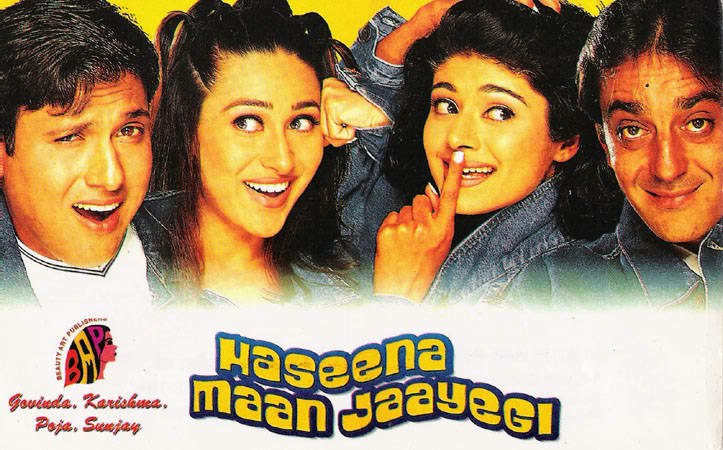
Never in my living days have I seen such interest in a movie based in India. The hype is unbelievable and it would not surprise me if it nabbed the Oscar for Best Director, besides the mostly certain nod for A.R.Rehman for his brilliant musical score. But has it really rung the right bells, tickled the right feathers, fluffed the right pillows with the messages it has sent out?

It's been a month now since I saw the movie. All the blurry images and the exciting sequences should have faded, and what's left must be indelible enough for a trustworthy review of this question. I watched this movie in New Jersey with a fairly dominant Caucasian crowd, and a few Indians (besides my relatives) seated in the last few rows. The "white folk" waited until the credits rolled to a close - each one of them - and applauded to no one in particular. The "desis" sneaked out before the lights turned on, clearly embarrassed by what had been depicted!


Separating The Grain From The Chaff

  • All Indians are fluent English speakers, albeit with an accent! - Myth. The movie was made for the Western audience. Clearly an overdose of sub-titles would have ruined the experience.

  • Primary schools run by the government primarily teach Classic English literature including The Three Musketeers. Myth. Primary government-run schools are lucky to have regular attendance from teachers, let alone students, and Three Musketeers is not a staple of the curriculum. Another of those facets palatable to a Western theme.

  • Slum-dwellers practice open defecation. Truth. Sadly, most of them do not even have the odd door to hide them from public view.

  • People stop what they are doing to watch "Who wants to be a millionaire". Truth. The Indian version of WWTBM actually reported the highest TRP ratings ever, as high as an Indo-Pak cricket match, for weeks together.

  • Bad guys grab kids off the street and mutilate them, before putting them to work as beggars. Truth. It is no coincidence that 4 out of 5 child beggars I encountered in Mumbai were either blind or handicapped. The occasional girl also carried a baby "brother" for added sympathy-value.

  • A Mercedes luxury car can be unscrewed apart in a mere matter of minutes. Truth. Oh yeah, that can definitely be done with a team of skilled hands! In some parts of Mumbai, a stolen car is dismantled even before a police report has been filed.

  • A band of Hindu activists attacked pockets of Muslim population with swords. Truth. Of course, there was a tit-for-tat too.

  • Commuters don't give a damn when a bunch of bad guys drag a woman off the trains. Truth. Too often has this proved to be true in a city like Mumbai, where everyone always has something more important to do.


It's All True!

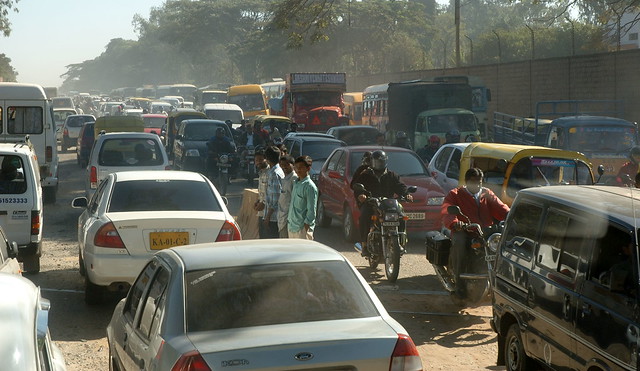
When most of what we saw in the movie was true - and most people who have lived in Mumbai will testify to that - then why are so many Indians raging at this depiction? One reason is that the upwardly mobile and social elite are now shamed because the truth is out about the slums and poverty of the country, which is embedded even in one of the biggest cities of the world like Mumbai. To add to their misery, the direction and cinematography of the movie has been so colourful and fast-paced that it has got people hooked and sold them the story a dime a dozen. The story of the "real" India.

If we keep the hollow pride of these elite aside, one can hear the voices calling for moderation, for the complete picture. Although the movie only hinted at the glowing side of a progressive nation, the focus clearly was on the poverty, and the indomitable spirit of a slum child to rise above it.


The Whole Is The Sum Of The Parts?

No one can blame these critics either. The West has always loved its cliches. 20 years ago, India was a nation of moustachioed snake charmers, "turbanised" rope tricksters and beggars. Today, it is the nation of back-office tech geeks, call center operators and beggars. The Western media has been awash with stories of the roaring Indian Tiger and the fiery Chinese Dragon. I have had numerous personal experiences of the latent exasperation in Strangeland that boils up at success stories from South Asia. In a way, stories of poverty, true as they may be, gives them a much vaunted sense of vindication, that finally their suspicions and doubts have found a base to latch on to. No wonder then that the book of the year (Arvind Adiga's Booker prize winner The White Tiger) and most likely the movie of the year, had poverty and deprivation in India as their central theme.

To the world - Do realise that no single movie can show you the complete picture. More than half of India's populace is poverty-stricken, but not everyone is miserable. Nor is every other person in tech-support. It is a country of financial extremes, visible both in big cities and the remotest villages. You have to see it to understand it!

To fellow Indians - Stop caring what the world thinks anymore. That was Mahatma Gandhi's way too. Let our actions speak for themselves. If this leads to a little complacency from the rest of the world, that wouldn't hurt now, would it?

Sunday, December 07, 2008

Reactive, Or Proactive?

It was the 26th of November, and I had a day off work as I was flying out from Austin toward Newark to spend the Thanksgiving weekend with relatives from Mom's side. The news scene was calm when I left home. 6 hours later as I land in Newark shielded from the real world in the confines of my airplane, my sister calls up to tell me there has been a dramatic change, and looking at how the events unfolded since, it is clear not much will be the same again.

At the airport, people watched as CNN splashed pictures of a burning century old Taj hotel, by the side of which I have walked so many times, but never ventured in. Reports of a massive operation by infiltrators who breached the shores of India's financial capital, my home for over 17 years, using boats, poured in as I stared in shock. CST railway terminus, which was where we would get off to go watch a movie at Sterling or Regal, was splattered with bodies and bloody trails of cold-blooded murder. Of all the places attacked by the cowards, the brutal mindless slaughter at CST where 2 men with guns simply sprayed bullets and lobbed grenades into the 10PM crowd, hit me the hardest, although the Indian media begs to differ.

Global Exposure

Living in Strangeland at this time gives me a different perspective of the reaction to the attacks, one from the same country that faced its own attack on its financial hub on 9/11, and responded in kind, and more. The widespread coverage on CNN, all day long, over local US news really is unprecedented. It surprised me that they deemed it important enough to cover the story as it unfolds, given the apathy of Strangeland toward anything that does not concern themselves directly.

It was clear then that the terrorists had achieved their motives. Their blasts were loud enough to be heard all across the globe. They targeted foreigners to ensure the international media paid attention. Not many international businesspersons will see India as a secure place anymore, at least for a short time. Strangeland tried to find a link back to itself - the epicenter of global interest - as it always does. Theories tying the attacks to the change brought about by election of Obama were thrown around, but not for long. When the links to Pakistan were loud and clear, there was only one voice - Pakistan is a rogue state and at the crossroads of all terrorist activity in the world today.

Local Excesses

It is understandable that people are stunned, hurt and angry. I plead guilty of belonging to the same club myself for a while. People want action, immediate results and solutions, a boost to the confidence of walking freely again in their own streets. Television screens and newspapers and internet blogs are awash with nationalist fervour demanding instant karma, and booing the government for its inaction. The only problem is that there is no quick fix to this madness. It's hard to realise this when one is possessed by hatred, and emotions blur all sense of reason.

All it took for me, is my brother to ask a simple question - "So you think a war is the solution?". Going on a hunt to find and, to use Bush-speak, "smoke-out" the perpetrators of such violence will only make us exactly like these terrorists themselves. And who is to say this will have achieved anything, other than a false feeling of security? It can only breed more hatred against India, which most people in the world today see as a peaceful nation.

Lessons From The Recent Past

One only needs to look at Strangeland and their reaction after 9/11. Two heavily funded wars, thousands of soldiers lost, almost a trillion dollars burnt, economy in ruins, and what is the state of terror in the world today? Yes, the American shores haven't been breached since, but clearly, the war on America has moved elsewhere - Iraq. The deaths of thousands of innocent civilians in Iraq and Afghanistan do no good to the American image in the world - especially the Islamic population. How can Strangeland claim to be better today than the enemies it fights?

Einstein once said, although not related to this context, that "Problems cannot be solved at the same level of thinking that created them". How can we stoop down to the same violent tactics and mindless slaughter, in the quest to eliminate terror, that the terrorists themselves apply? Who is to say that since we claim to have better intentions and seek the greater good, we are more righteous in our actions? Is there a way to leave all the innocent people, who want nothing to do with these activities, out of this?

The Indian Way

There is only one way to tackle the problems India faces - the Indian Way. That is the way we fought for our freedom, and that is the attitude that ensures billions today still look up to India for its peaceful outlook. Just last week my cab driver from Ethiopia smiled back at the mention of my Homeland, because of his image of the country, and his interactions with his teachers who came all the way from India to teach in his schools.

The Indian Way does not mean we turn over the other cheek and wait for the next slap. Its essence lies in the statement - "Despise the action, not the doer". The problem of terrorism cannot be solved by finding and eliminating all the people involved. That is just too simplistic. One has to locate and weed out all the sentiments that lead to such inhuman acts and try to address them at the same time that we take steps to locate the actual actors involved.

Of course, if a war is forced upon us, we will fight like we have 4 times before, to protect our sovereignty. But, a war initiated as a remedy is not the solution, ever, to any problem. If anything, it sows the seeds of more problems for the future. With India's economy booming, and the world watching, do we want to bankroll a war and take ourselves back by 20 years? Won't a war really be a victory for those nasty terrorists who ploughed through Mumbai? The attack on the financial hub of India, will eventually have then led to its economic demise.

To sum it all up, here's a little incident. At a comedy club in New York, a few days after 26/11, the host found me, an Indian, in the audience and said "I can't understand why, when there are a billion of you guys, you don't just go over and kick Pakistan's ass". Everyone laughed. But we know the answer, right? Cos we are not Strangeland.

Saturday, October 25, 2008

Destination Moon

Another date was just added to the long list that Indians like to remember. Along with the birthdays of great leaders and deities, historic and mytholigical events, 22nd October 2008 will hopefully be another date that brings a glow to every proud Indian's face. For on this day, India joined the elite club of nations that have sent a mission to the Moon. Chandrayaan-I (which literally means "vehicle for the moon"), at the time of writing this, is in an orbit around the earth with an apogee of around 76,000 Kms, which will be increased in 3 more bursts to put it into the grasp of the Moon's gravity and subsequently in an orbit around the Moon.

The Moon? Why not Mars?

This was the first question shot back at me as I disclosed this well-kept secret to colleagues in Strangeland. Not surprised at the obliviousness to activities outside their "well". However, good question.

When the "Cold War in Space" was going on between Strangeland and erstwhile USSR and they were racing to get to the Moon, Indian scientists were still literally in their diapers trying to launch rockets that breach the atmosphere. After all, we were a young nation recently freed off Colonial rule and grappling with the teething problems like poverty, population control, self-reliant economy, that we still fight to this day. The Indian Space Research Organisation (ISRO) began by launching weather and communication satellites using the launch-services of other nations, and gradually perfected the art of launching satellites themselves with the Polar Satellite Launch Vehicle (PSLV), indigenously developed over the years.


It is clear that for a nation that does not have a free flow of green bills to fund research, a small, less risky step to establish itself in the space fiefdom is better suited than to blast its way into the "We've been to Mars" club. Former president Dr. APJ Abdul Kalam, a revered national hero and scientist, also urged ISRO to shoot a probe to the moon and mark the silver soil with an Indian flag, anticipating a race in the near future to exploit the Moon's resources. After all, the responsibility to tend to almost a sixth of the world's population requires such forward thinking, doesn't it?

Does a moon mission feed the hungry?

One of the boiling controversies around the world has been whether the $86m spent on the Chandrayaan-I mission is criminal given the fact that over 200m children in India are undernourished. I am not sure if these are comments from self-righteous trolls from the West who think they have a handle on all their social ills. Maybe it's burning envy that leads to such comments. It is too naive to look at things in such a narrow perspective. With this argument, India should also abandon all the huge sums of money spent on any kind of welfare like education and first ensure children don't die hungry. Agreed the problem is severe, but space research and technological progress are not antithetical to welfare.

Studies in Strangeland have shown that the huge amounts spent on NASA have more than paid back on the investments in terms of technological spur, motivation, and introduction of new economies around the sector that feed off the scientific advancements. A few years ago, bright Indians graduating from prestigious institutes would look around for opportunities, and shrug their shoulders and fly abroad to greener pastures. How many of those will now be forced to think twice, and be motivated instead to join institutes in India?

As for the Indians who oppose the money spent on Chandrayaan-I, I only have this to say. Stop watching cricket, feeding the mammoth economy that spins money around the sport, and wastes resources including time and moolah. Stop overpaying the whole cricket system, from the players to the babus. Where is the national pride in that sport anyway, however hollow? How many more children can be fed by sacrificing futile cricket investments?

Strangeland, strange response

The one news article I caught on CNN related to India's mission betrayed yet again the jingoism required here in Strangeland to maintain high confidence in the face of despair. Announcing the mission to the viewers, the news item quickly moved on to China's (the new communist foe to observe and overcome) recent space achievements, and asked why the US has stopped its missions to the Moon at a time when everyone else seems to be on the bandwagon. It was finally wrapped with a chest-thumping cry - "Cos we've been there, done that, almost 40 years ago!". Strangeland is clearly wary of the Tiger and the Dragon.

Here's wishing everyone involved in the mission to the Moon - you make us proud!

Saturday, October 04, 2008

Ebony and Ivory, Mars and Venus

My stint in Strangeland happens to coincide with one of the historic moments in Strangelandian history, and I get to witness first-hand some of the most remarkable events taking place as this nation tries to finally shed the image of an intolerant society when it comes to choosing the president. In one of my very early posts back in October 2005, I had ridiculed that the White House should really be renamed to the White Man House so that it becomes explicit who is allowed to become President of Strangeland.

Little was I to know that in less than 2 years since, both the words "White" and "Man" were about to be challenged like never before by Barack Obama and Hillary Clinton. After Hillary's bitter acceptance of defeat, the Republican nominee John McCain, revived the interest she had generated in female voters by choosing Sarah Palin as his running mate. It is yet to be ascertained if at 72, McCain has the legs to run really, while Palin, having already announced herself as a "Hockey Mom" and "Pitbull" has made it clear for the record that she is willing and capable.

On The Stand

One thing that caught my eye was how the media is allowed - in fact they deemed it their right - to corner the candidates and put them on a pedestal dealing with all sorts of questions and responses on issues. In Homeland, in stark contrast, the politicians decide when and where they will speak to the mass public and what they will be willing to talk about. The media there is really no more than a pair of omni-present eyes and ears that notes every move and jots down every word they can get their hands on. We never get to know our leader up-close and personal. They are but a face behind the microphone, and it is upto us to sort through the truth from the unavoidable bag of lies.

Putting candidates on the stand brings out this other side which we don't see in rehearsed speeches written by stunningly skilled writers - responsiveness, reaction to questions and real issues without the luxury of peeking down on a piece of paper. I personally think that is very important to allow the voters to decide who they want to choose.

Foot-in-mouth, head-up-backside

Of course, one can only enjoy the obvious results of the reflex action tests that mediapersons put candidates through - the truths that slip out, the gaffes that they can't tie down. When that happens, hapless campaign managers have to come out and firefight to put the words into context and turn them on their head.

In this regard, I like to compare Palin to a mix of Govinda (MP from North Mumbai) and Laloo Prasad Yadav (Railway Minister in cabinet). When she calls herself one from the "small town" and "far away from the politics of Washington", I can only remember Govinda's election-winning catch-phrases like "Virar ka chokra". When she talks about her hunting and pets, memories of Laloo describing his morning chores involving milking the "bhains" inevitably shoot back. Who says Homeland politicians are obscure?


When it comes to lies, half-truths, dodging issues, walloping the opposing candidate, dirty scandalous tricks, I don't think Strangeland politics is far behind Homeland at all; only more transparent. Tons of TV shows on news channels and comedy networks pick up on these sly remarks and put them in perspective for all to see. For instance, John McCain is taped saying the "fundamentals of the economy are strong" and that he has no fears for it only 2 weeks before the Wall Street crash, when he then comes out to say "we are in the midst of the worst crisis" he has ever seen.

The debates

Another interesting aspect of the campaign here in Strangeland are the live, televised debates between the candidates. While the nation watches, the two of them fight it out for mass approval in 90 minutes of feverish argumentation. There are few better ways to analyse the candidates than simultaneously being able to weigh them against each other. Another advantage I am sure the voters in Homeland would love to be able to have. All we get are mass rallies, memorized lines and jingoistic slogans. A debate brings out the best and the worst in the candidate, shows you how strong they are, how smart they are, and how gracefully they can deal with heated discussions. I don't need to choose one of these candidates, so I simply enjoy the debates like only a Homelandian can.

In exactly one month's time, the ballot will be held and the verdict will be out. Hopefully, it will be the historic ballot that everyone looks forward to. As for Homeland, I really don't think it matters who wins. History shows that no matter who the President is in Strangeland, the foreign policy remains mostly along the same tangential - aggressive, self-serving and self-gratifying.

Select famous phrases from the candidates

"Do you know what the difference between a hockey mom and a pitbull is? It's Lipstick!" - Sarah Palin.

"Hillary Clinton is as qualified or more qualified than I am to be vice president of the United States of America. Quite frankly, it might have been a better pick than me." - Joe Biden.

"On this Memorial Day, as our nation honors its unbroken line of fallen heroes -- and I see many of them in the audience here today -- our sense of patriotism is particularly strong." - Barack Obama.

"It's easy for me to go to Washington and, frankly, be somewhat divorced from the day-to-day challenges people have." - John McCain.

"They're our next door neighbors and you can actually see Russia from land here in Alaska, from an island in Alaska." - Sarah Palin.

"As for that VP talk all the time, I'll tell you, I still can't answer that question until somebody answers for me what is it exactly that the VP does every day?" - Sarah Palin, before she was chosen to be the running mate.

"The role of the vice president is to break ties in the Senate and inquire daily into the health of the president." - John McCain.

Sunday, August 10, 2008

Your Time Has Come

After months of world-wide protests and questions about health safety, the 2008 Beijing Olympics finally kicked off. And what a kick-off it turned out to be! For the Western world, so sure of their dominance with technology and culture and virtues and basically everything, the opening ceremony itself was a kick below the belt, a rude awakening.

The Rise Of The Dragon

Not that China hasn't grabbed attention over the last few years. Phenomenal population growth and hitting the billion mark, were soon followed by a successful control in birth rates. Of course, how the control was achieved may have a dubious side or two of its own. Which brings us to the second most popular Chinese coverage in the media - human rights abuse. Reports about the second child being snatched away from hapless parents, anti-communist or pro-Tibetan protests being squashed without notice and general forceful adherence to communist policies have hogged the international media and portrayed China as a fire-spitting Dragon. The largest number of criminal executions in the world anywhere doesn't get missed either.


The most popular Western media coverage of China though stems from fear, a realisation deep within about the coming of a superpower like none before, but one which no one wants to accept completely. Statistics proving China is now the "circuit-board" of the world, leading in electronics, and generally any sort of manufacturing, are ably matched by numbers showing disproportionate growth in GDP and wealth, and eventually political clout and military might that the Dragon now wields. Everyone is looking behind their backs.

Whatever the reason, one thing is for sure. From a virtual nobody, China is on the world's lips and thoughts every single day now. Their presence is not taken for granted anymore.

Icing On The Cake

Gone are the days where the West enjoyed centuries of technological superiority on the back of the Industrial Revolution. Now, most manufacturing takes place in East Asia. A popular tag on products in the stores in the US reads - "Designed in the US. Made in China" - as if to reassure where the brains lie. Nevertheless, the Chinese have not only minted money from their manufacturing exploits, but also inherited skills that help them master technology on their own.

What better way to signal your intentions and abilities to the world than the Olympic Opening Ceremony, while everyone on the planet is tuned in. The magnificent display filled the senses of the viewers and everyone must have been left with a gaping wide-open jaw. Anyone who still thought of China as the land of cheap labourers, will not dare to think that again. Lights, organisation of massive proportions, sounds, colours, shadow-plays and marvels of modern technology intermingled with varied sights that gave a glimpse into the country's five thousand year cultural history and variety. It was like saying - "We have always been around, long before any of you were civilized. Now, we are ready to take the stage."


Homeland, Take a Cue

It is widely said that the next coming would be that of India's. Homeland will soon be 61 years old - young enough to justify it's lag - but another nation whose time is almost here. After China, the Indian Tiger gets second-best media coverage in the West. But, it is not one of utter fear, but rather one of upheaval of the backward. A story of rags to riches, as opposed to lust for universal fiefdom.

I wonder how India will send its message out when it wants to announce to the world that there is a new kid on the block. History however, gives us enough clues. Homeland has never been boisterous. The messages are always subtle, and India has always preferred a gradual flowing change as opposed to a sharp transition. So eventually, I believe when its time comes, people will not be shocked but instead accept it as fate that awaited. However, I do hope there are a few little stunning moves in the midst. I anxiously look forward to the lunar-probe mission - Chandrayaan-1 - later this year. No one expected India to come this close to such a massive step, indigenously, only a few years after Independence. It's all been hush-hush, but when its time to blast off, I hope it isn't!


Fear Translates to Hate
A few months ago, I walked into a barbershop (hair saloon for the unconventional) in Strangeland. The media was whipping China's backside for toxic levels of lead in Chinese toys (80% of toys in the world are Chinese!) at the time. A mom was helping her 7 year old with his homework - an essay on toys - while she waited her turn. Seeing me walk in, she somehow felt like I needed chastising, and asked her son to read aloud what he had written. He read aloud - "I love playing with toys when I come from school. However, recently, I learnt it is not safe to play anymore. The Chinese toys are poisonous. China makes bad toys, and everything they make is bad. They should stop making things and we should stop buying from them." The mom gave him a mini-applause, both obviously needing a lesson in global economics, and of course, English essay writing. By the way, do I look like I am Chinese?

Sunday, July 20, 2008

Stranger In A Strangeland - Part II

Another brave soul landed on the shores of Strangeland on April 6 last year, hoping the experience of working here will turn his career around. I must have surprised myself when events took their turn in such a mysterious manner to push me on that Air France flight to Strangeland, for my second, but extended, stint. Surprising because most people close to me know that I despised the idea of working here, and swore never to follow the Patel family troops to the land of opportunity. I have always maintained the haves are hypocrites who are certain the have-nots are simply either "not bright enough" or lazy, and that Strangeland is the outstanding example. Why would I want to work for them?

Yet, events like becoming a Computer Engineer, and then getting a Master's degree, joining the IT services industry, and ending up on the project I worked on have conspired to make me go against myself. After 1 year and 3 months, I felt it was time to take stock!

Why Am I Here?

The same reason why I am not a physicist or an astronomer today. Popular choice. I don't blame anyone, not my peers, not even myself. When I was 18, I somehow weighed up spending long years earning a PhD against starting to earn within 4 years in the IT industry, and the financial implications made sense. You just go with the flow after that. Working as a software engineer in India, it is only a matter of time before you get the chance to come down to Strangeland. Of course, you do need to be in the sweatshop business serving Strangelandians.

How Do I Feel?

Lonely.

Lonely because I miss my family and my friends from my student-life. Once you leave all this behind, you start to realise what they meant to you, and that you just took these things for granted. I feel damn lucky to have such friends as I once had in Kandivli, a bustling suburb stuck away in the crowds of Mumbai. In a way, what I never once experienced amongst my own for 24 years, I am now suddenly exposed to.

Confused.

The confusion arises from all those questions my idle mind is now starting to ask.


  • "What do you want to do with your life?"


  • "Is there any purpose to all that you do with your struggles at work and the daily chores?"


  • "Should I believe the Bhagavad Gita and blindly carry on my work, because there is nothing else to life other than fulfilling your purpose, your work (karma yoga)?"


Amused.

Low-rise skirts, shorts, tons of make-up, short-trim - all of these can be found in Homeland too. You just have to walk into a mall in one of the big cities. Yet there are things that amuse and surprise me everyday.


  • You see 4 in 5 women flaunting tresses that don't defy gravity and simply fall straight down in neat parallel lines. How many of those are natural!?


  • The smiles when they pass you at the grocers - where the corners of the lips move outwards, not upwards - an unwarranted pleasantry.


  • Ladies pulling out the mirror and make-up kit when the car is waiting at the traffic light, for barely 30 seconds.


  • Answering questions about where I get my protein from, if I "only eat vegetables". And, "What the hell are pulses/lentils?" or "So fish is not vegetarian?"


Enlightened.

Working with a bunch of 40-year olds is quite a treat. They seem to anticipate everything, and can map previous experiences into current situations and rationalize solutions so well. They finally have stopped treating me like a baby, so that's a good sign. I have also found a few itchy genes that make me want to cook various dishes over the week - surely a gift from my mom! I read more books like I used to when I was in school, and re-living that experience is a joy. Ok, so that's not an enlightening, but I sure have discovered stuff about myself in this little journey.


What have I inherited?

I now sport a really short-trimmed mane, although that was more the fault of the first time a male barber chopped my hair off in Strangeland. He was in a kind of hurry that I have only before witnessed in commuters in Mumbai ambling hurriedly to catch the 6.03PM Borivli Fast local train. Contact me for pictures if you want to amuse yourself. The sad part is, I now seem to like this trim!

I walk to work everyday, which is an arduous task when the temperatures are touching 40 degrees Celsius (me no understand Fahrenheit yet), and it gives me an excuse to wear shorts, "cos they are comfortable". Oh, they sure are and I can't seem to make myself wear jeans anymore! I even pranced around Bangaluru in shorts this April.

A work ethic totally different from what I witnessed in Homeland. The good part is, you only work in the workplace and dedicate all your energy to work while you are there. The bad part is, you never develop any personal relations with any of the office folk, and every relation is "strictly professional".

All in all

Eventually, I do feel less of a Stranger in this Strangeland, partly because I have inherited some Strangelandian qualities. And thankfully, I have learnt things about myself that I never had the time to discover.

Sunday, June 29, 2008

Don't Judge Me!

It's the easiest job in the world for me. Judging other people, their behaviour, their performances, their actions. It's the one task where you need no certification for the role, simply privilege of position. You stand to lose nothing as a judge, while the judged stand to lose everything. You need no tools or statistics to guide you, only a personal point of view. How easier can it get? Everyday, we expose ourselves to the world, where every step we take is watched, each failure we encounter is counted, every shortcoming we disclose is noticed. The society is divided into two buckets - winners and losers - and who wants to be in the losers bucket?

When did living become synonymous with winning? When did tryers become synonymous with losers? I am not sure. Maybe as I was growing up?

My Judge is a Superstar

I recently read a disturbing news item, where a teenage girl, with an established dance background, walked into a TV show for performing in a televised contest, and was rebuked by the "star" judges for her performance. Young minds don't need this kind of treatment, not in front of millions of vicarious hounds sitting in front of their TV sets, waiting for someone to slip-up and be virtually slapped in public. Yeah, this is entertainment, alright. Ask the parents of the girl, as they wait in agony day and night at the hospital, awaiting their daughter to come out of shock which has dragged her into post-depression semi-paralysis and muteness.

Shows in the West often add spice by adding high-profile judges who are given liberty to exercise no restraint on verbal extremities when chiding a contestant. It makes great prime-time television as you watch the wheat separated from the chaff, and the chaff gets a nice whack on the stone in the process too. Shows like American Idol, The Apprentice, Hell's Kitchen and numerous other reality-based shows have grabbed the attention of eyeballs and eardrums by thumping participants in public. If you are good, you are showered in gold. If you are less than good, you are soaked in manure, thrown into a pig-sty, and left to dry in the hot sun. It's sad to see, these kind of barbaric television antics are being fed to entertainment-hungry Indians too now. And how they are lapping it all up!

Who are you to wave your finger?

Who defines "good"? How do you know how far less than good is considered bad? Is a successful endeavour one where a single person excels and the whole world is left in awe, or one where no single person wins and everyone ends up better for the effort? The premise of judgement is so murky and left to individual perspectives, one is surprised why we give it so much importance in our daily lives.

Why do I get affected when someone glances scornfully at my attire? Fashion to one, is rags to the other.
Why are grades in school given more weight than what the student actually learns? We all know Einsteins are not produced in schools.
When did overcoming stage-fear and putting up a public performance start producing rebuke instead of applause? When I was a kid, you were a winner even if you stood mute on the stage and walked out when the bell rang.

If I continue listing all the judgement one has to face in a lifetime, I could write a book on it. The real question is, why are we, as humans, both ready to dish out verdicts and to succumb under their burden? More importantly, why do we let every single person who cares to judge us, judge us? Just because they achieved something which is noteworthy? Just because that is how they command respect? Oh how great it must feel to tell someone what you think of them and then bask in the thoughts that she will be better for it, for setbacks trigger fightbacks to success!

I Will Be The Judge Now

Here, then is my verdict! It is the natural tendency of a competitive human species to push down the others when they themselves feel threatened. Sometimes, pushing down the weak, makes the strong feel stronger. Sometimes, they stand up and "frankly" point out weaknesses, believing it will earn them respect. We have to learn to accept this nature, and have a strong filter to only let through those statements that matter. Building the filter itself, is an act that can take a lifetime, but we can get to work on it today.

I should admit, for all that I write here, I have been known to be highly susceptible to negative feedback, and hugely reliant on positive ones. But, I believe I have learnt a lot in the process. The simplest way is to only trust feedback from the ones you know really care about you - your family and the closest friends in whom you can always confide in. It's true that there could be so much feedback you miss out on because not everyone in your circle is good at everything, and can comment on everything. But, one will learn in time to tune their ears to the right feedback, both positive and negative, from all around. It is always important to know that negative feedback should never affect your spirits, and should only be treated as course-correction at best, not a disaster of titanic proportions.

What is sad though, is that many a time, I have witnessed parents push their children past the limits to pedestals where they are exposed to such chiding. Victory is sometimes more important for the parents, than for the kid. Where can a youngster hide, if eventually, he has to face the wrath of his father for losing a tennis match or the ladle of her mom for slipping during the dance recital? For people to be safe of all that is bad in the world, there needs to be a home that they can always be accepted in, without any judging. Without that, no filter will ever be good enough.

Nevertheless, it helps to remember, if there's one thing Einstein has taught us, it is that everything the human mind can discern is relative, and nothing in that realm is absolute. Judgements too, are after all, creations of the human mind.